
Court cancels enforcement order; farmer can resume cultivation
By Lucy Ibbotson, on Saturday March 2014
Otago Daily Times
A Hawea Flat farmer can continue cultivating his land after
an Environment Court ruling found in his favour yesterday.
The court cancelled an interim enforcement order which had
stopped Dougal Innes from carrying out any further vegetation
clearance or discing on his property next to the Clutha River
since March 3.
The case was brought by the Royal Forest and Bird Protection
Society of New Zealand, which said significant native
vegetation was being destroyed by the cultivation work.
Resource consent should have been required under the rules of
the Queenstown Lakes District Council's district plan, the
society said.
In delivering his finding verbally yesterday following a
four-day hearing in Queenstown, Judge John Hassan said
continuation of the interim order would serve ''no valid
resource management purpose''.
Mr Innes could resume developing the area of land he had
already cleared and disced, as it was unlikely any indigenous
vegetation - as defined by the district plan - remained or
could be recovered. [Editor's note: on the contrary, the evidence showed significant indigenous vegetation had survived the discs on the lower terrace, which would recover.]
It was unlikely the district plan would be breached by any
further disturbance.
But the court found clearance of indigenous vegetation on the
as-yet-uncultivated remaining land would be a restricted
discretionary activity.
Mr Innes could not cultivate that area without first getting
resource consent, if his proposed activity required it.
The court was satisfied Mr Innes had ''demonstrated at least
good intent'', Judge Hassan said.
That was evident in the fact he had not disturbed areas of
his land containing historical features while waiting for
advice from an archaeological authority and in the patience
he had shown during the Forest and Bird legal action.
Forest and Bird had argued environmental effects were the
critical consideration, rather than the effects on the
parties.
But Judge Hassan said it was relevant to consider financial
hardship to a person.
The court considered it unjust to maintain the order for
reasons including the ''undue financial hardship'' it would
impose on Mr Innes who had acted responsibly and with due
diligence before beginning clearance work.
Council officers who advised Mr Innes he did not require
resource consent for the activity ''could not be said to have
obviously got it wrong either''.
It was ''most unfortunate that due to the council's systems
error'' the ecological assessment findings of the property -
noting the presence of indigenous vegetation - were not
provided.
Mr Innes - who had told the court he invested his family's
life savings in the property - expressed relief yesterday,
following what he described as a stressful few weeks.
''I'm happy, there's no doubt about that.''
He thanked his supporters, including the large number of
farmers who had been present in court throughout the hearing.
Following the decision, Forest and Bird Otago Southland field
officer Sue Maturin said a special part of Central Otago had
been lost.
''If the Queenstown Lakes District Council had acted to stop
the destruction as soon as Forest and Bird alerted it, we may
not have lost one of the best and biggest remaining areas of
short tussock grasslands, cushion fields, and dry land
ecosystems in the Upper Clutha Basin.
''This case highlights the need for councils to be much
better at advising landowners about their obligations under
district plans; to have clear rules to protect biodiversity;
and to strongly uphold the integrity of their plans.''
Forest and Bird would decide on any further action after it
had seen the written findings, its lawyer Sally Gepp said.
Saturday, March 29, 2014
Court Cancels Enforcement Order

Friday, March 28, 2014
Ruling Expected Today ...
Ruling expected today on land-clearance caseBy Lucy Ibbotson, on Friday 28 March 2014
Otago Daily Times
Should farming activities or protection of indigenous
vegetation take priority on a contentious piece of privately
owned land at Hawea Flat?
That is the question the Environment Court will answer today,
in a decision Judge John Hassan says is ''by no means an easy
one''.
The ruling could have significant implications for the
farming industry if an interim enforcement order issued
against farmer Dougal Innes earlier this month is upheld,
lawyer Graeme Todd submitted to the court in Queenstown
yesterday.
The order was obtained by the Royal Forest and Bird
Protection Society of New Zealand, which considers protecting
the indigenous vegetation on Mr Innes' land a matter of
''national importance''.
Mr Innes had already disced a large part of the site before
his farming activities were halted by the order, which he has
applied to the court to have cancelled.
In closing submissions, Forest and Bird lawyer Sally Gepp
said the consequences of Mr Innes not being able to cultivate
his land this year should not override a clear breach of the
district plan, the adverse effects already caused at the site
and the further effects which would occur if the order was
cancelled.
''Protection of significant indigenous vegetation is a matter
of national importance which all decision-makers must
recognise and provide for,'' Ms Gepp said.
The most appropriate forum for considering Mr Innes' proposed
farming activity was a resource consent process where all
parties could have a view on the matter through notification.
''[Mr Innes] is required to seek consent for indigenous
vegetation clearance like any other person.''
It was ''not an ex-appropriation of his rights'', but rather
a normal and legal application of the district plan.
Mr Todd, who is acting for neighbouring landowner and
interested party James Cooper, said the significant question
if the interim order was upheld was: which landowner in the
district would be next?
''If farmers are required to spend thousands of dollars
applying for resource consents for every act of clearance of
their land and if their ability to cultivate and farm their
land is curtailed by a standard that they are not allowed to
clear pasture even if a few indigenous species are present on
a site, this has significant implications for the farming
industry not only in this region but in other regions.''
Mr Innes' lawyer, Jan Caunter, said Mr Innes had ''asked all
of the right questions and sought advice from all the right
places'' on matters relevant to buying the property and which
might have affected his ability to use it.
''He sought LIM reports which did not alert him to the
presence of indigenous vegetation on the site. It did,
however, alert him to activities that had previously been
approved on the site, which were in many respects similar to
what he wished to do,'' Ms Caunter said.
''[He] received what essentially amounted to 'yes, you can go
ahead'.''
Federated Farmers lawyer Richard Gardner said because the
land had been used for primary production purposes for a long
time and cultivated on occasion for those purposes, Mr Innes'
claims to existing use rights were ''well founded''.
''There is no basis upon which the interim enforcement order
can be sustained ... Mr Innes and the other farmers in the
Queenstown Lakes district who are concerned about the
implications of the interim enforcement order should be left
to go about their lawful farming activities,'' Mr Gardner
said.
Further consideration was given to a compromise, as mooted by
Mr Todd on Wednesday.
Judge Hassan asked three ecologists - who were appearing for
the council, Mr Innes and Forest and Bird - their view on an
appropriate width for a possible buffer zone on the southern
boundary of Mr Innes' property, to protect indigenous
vegetation on neighbouring land owned by Contact Energy.
Their opinions ranged from 20m to 200m.
Thursday, March 27, 2014
Land Compromise Raised
Land compromise raised
By Lucy Ibbotson, on Thursday 27 March 2014
Otago Daily Times
The possibility of a ''compromise situation'' benefiting both
sides of a land dispute was raised in the Environment Court
sitting in Queenstown yesterday.
Detailed scientific evidence was given by three ecologists on
day three of a hearing to consider Dougal Innes' application
to cancel an interim enforcement order stopping him from
farming his land at Hawea Flat.
The order was obtained by the Royal Forest and Bird Society
of New Zealand, which has concerns about the potential loss
of important indigenous vegetation on the site, which has
already been largely cleared and disced by Mr Innes.
Arrowtown ecological consultant Glenn Davis appeared for the
Queenstown Lakes District Council, having surveyed Mr Innes'
land as part of an ongoing council project to identify areas
of significant indigenous vegetation throughout the district.
During cross-examination by lawyer Graeme Todd - representing
neighbouring landowner James Cooper, an interested party in
the proceedings - Mr Davis was asked what he believed should
happen with the land and whether it should be ''locked up''
in the future from further development.
''I would like to see some effort made to at least restore
some of the land or maintain at least some of the disturbed
land,'' Mr Davis replied.
Mr Todd said maintaining the interim enforcement order would
have ''catastrophic implications'' for Mr Innes, as it would
prevent him from gaining any income from the land.
He asked if Mr Davis had therefore considered a ''compromise
situation'', where the order would be uplifted and some other
means of protection applied.
Mr Davis said he had thought of other options, including
leaving aside some of the land that had already been
disturbed to provide for a ''sequence of vegetation''
spanning the site from the Clutha River to the upper
terraces.
''In doing so, there would need to be some reduction in the
area that Mr Innes has available for farming.''
Based on his observations, Mr Davis told the court further
physical disturbance of the site would exacerbate the
''significant damage'' that had already occurred, but sowing
and irrigating the land, as intended by Mr Innes, would
''fundamentally alter'' the whole site and the important
plant communities found there.
The hearing continues in Queenstown today before Judge John
Hassan and commissioners John Mills and Ian Buchanan. A
decision is expected to be issued verbally by the court today
or tomorrow.
The case is attracting a large amount of interest, with
members of the farming community present each day in the
public gallery and the district's Mayor, Vanessa van Uden,
and Waitaki MP Jacqui Dean in attendance yesterday.
Wednesday, March 26, 2014
Tensions At Hearing
Tensions at hearing
By Lucy Ibbotson, on Wednesday 26th March 2014
Otago Daily Times
The Queenstown Lakes District Council's level of culpability
came under the spotlight yesterday in a land debate pitting
farmers against conservationists.
Representatives from both sides packed the public gallery on
day two of an Environment Court hearing in Queenstown
considering the cancellation of an interim enforcement order
against Hawea Flat farmer Dougal Innes.
The order was obtained earlier this month by the Royal Forest
and Bird Society of New Zealand to prevent Mr Innes carrying
out further native vegetation clearance and discing work on
his land next to the Clutha River, which is considered to be
ecologically important.
During a break in proceedings, tensions were evident between
some of the Upper Clutha farmers and Forest and Bird members.
The council's planning and development general manager, Marc
Bretherton, said field notes prepared by the QLDC's
ecological consultant identifying the site's conservation
values had mistakenly not been provided to the council when
Mr Innes sought advice on whether his proposed farming
operation would require resource consent.
Mr Bretherton and council planner Ian Greaves subsequently
advised Mr Innes it appeared there would be no breach of the
district plan.
''Based on the information that council held, there was
nothing telling me that he needed a resource consent,'' Mr
Bretherton said.
''Certainly, if we'd had possession of that [ecological]
information, that would have better informed our
understanding of the site ... and we would have been better
able to advise Mr Innes.''
Mr Innes was advised obtaining further information himself
would ''assist him in determining categorically whether
resource consent was or was not required'', Mr Bretherton
said.
Mr Greaves said he did not tell Mr Innes to seek additional
advice from an ecologist.
However, as it was Mr Innes' obligation to ensure he complied
with the district plan rule on indigenous vegetation
clearance, it would have been prudent to do so, he said.
''So every time a farmer wants to clear his or her land and
they're not sure whether they've got any indigenous
vegetation on it, they're going to have to secure the
assistance of an ecologist?'' Mr Innes' lawyer, Jan Caunter,
asked, to which Mr Greaves replied, ''Yes.''
Both Mr Bretherton and Mr Greaves agreed with commissioner
John Mills there was nothing to indicate Mr Innes was
''anything but straightforward'' and had acted on the best
information available to him.
Earlier, Mr Mills asked Forest and Bird field officer Jen
Miller for her view of the council's response to Mr Innes'
inquiries.
''To be frank, if I was Mr Innes I would feel less than
satisfied. I think it was not really giving him any direction
either way ... Perhaps the council might have been more
helpful to him in terms of the information they had
available,'' Ms Miller said.
Wanaka landscape architect Anne Steven, appearing for Forest
and Bird, acknowledged it was ''somewhat unreasonable'' to
expect Mr Innes, as a private rural landowner, to be aware of
the ecological information relating to the land.
Mr Innes also took the stand.
''I've invested our entire savings in this property . . . and
I didn't intend to be in this position we are now,'' he told
the court.
Asked by Forest and Bird lawyer Sally Gepp whether he would
keep cultivating the land if the interim enforcement order
was cancelled, Mr Innes responded: ''I intend to farm the
property, so yes, that's the reason I purchased it.''
Mr Innes' planner, Duncan White, told the court the
attendance of many farmers at the hearing reflected concerns
in the farming community about the wider implications of the
interim enforcement order against Mr Innes.
Tuesday, March 25, 2014
"We Have A Rule In The Plan ..."
We have a rule in the plan
By Lucy Ibbotson, on Tuesday 25 March 2014
Otago Daily Times
A young family facing ''financial ruin'' must be given the
same consideration as the protection of ecological values on
Hawea Flat land, it was submitted in the Environment Court in
Queenstown yesterday.
A hearing is being held this week to consider cancellation of
an interim enforcement order requiring farmer Dougal Innes to
stop clearance of native vegetation on land he has a purchase
agreement on above the Clutha River at Hawea Flat.
Mr Innes has already cleared a large amount of vegetation and
carried out discing on the land, which has been assessed by
government departments as having high conservation values.
The Royal Forest and Bird Protection Society of New Zealand
deemed Mr Innes' actions illegal and successfully applied to
the Environment Court for the interim enforcement order.
It was served on Mr Innes, as respondent, and the Queenstown
Lakes District Council earlier this month, around the same
time the council issued an abatement notice on Mr Innes.
However, in written legal submissions, Mr Innes' lawyer Jan
Caunter said her client had consulted the council and was at
no stage advised he needed resource consent.
''If we had somebody who had flagrantly breached the
[district] plan that would be quite different. But that is
not what has occurred here,'' Ms Caunter told the court.
''... It is submitted that the information provided to Mr
Innes by the council and the implication that no resource
consent was required is relevant to the court's assessment.''
The court needed to consider not only the potential for
damage to any indigenous vegetation on the site, but the
impact on Mr Innes of not being able to complete the
cultivation work, which would leave him with ''no reasonable
use of his land'', Ms Caunter said.
''Mr Innes and his young family are facing financial ruin if
the land is protected from further development,'' her written
summary of background facts stated.
Forest and Bird lawyer Peter Anderson said the effects on the
environment of cancelling the interim enforcement order were
a ''critical'' consideration and should be the focus, rather
than the effects on the parties.
He said if there was a strong case for an enforcement order
and if there was likely to be significant irreparable adverse
effects if the interim order was cancelled, there would need
to be a ''highly compelling reason'' for its cancellation.
Ms Caunter said given the ''significant'' level of
disagreement among the lawyers, planners and ecologists
involved in the case on how the district plan rules relating
to indigenous vegetation should be interpreted, it would be
especially difficult for a layperson such as Mr Innes to
accurately interpret them.
''There are lots of different ways of looking at the rule and
that in itself is causing me great concern, that we have a
rule in the plan that nobody understands.''
Judge John Hassan instructed ecologists acting for Mr Innes,
Forest and Bird and the council to jointly respond to a
series of questions aimed at providing clarity on the
definition of indigenous vegetation. They will report back to
the court today.
The hearing is expected to continue until Thursday, when the
court will issue a verbal decision on whether the interim
enforcement order is to be confirmed or cancelled.
Dairy farmer James Cooper, a neighbour of the site, and
Federated Farmers are interested parties in the court
process.
Saturday, March 15, 2014
Court Date For Hearing
Court date for hearing
By Mark Price, on Saturday 15 March 2014
Otago Daily Times
The Environment Court will begin a two-day hearing of a Hawea Flat land dispute in the Queenstown Court on March 24.
The hearing is the result of an enforcement order obtained from the court by the Royal Forest and Bird Protection Society on March 3.
The society objected to the ploughing of the 590ha area of land above the Clutha River at South Hawea Flat, near Wanaka.
Canterbury West Coast field officer Jen Miller told the Otago Daily Times a pre-hearing conference between the parties was held on Thursday.
The action the society has taken is against Dugald Innes, who is understood to have a right to purchase the land in question from Big River Paradise Ltd.
Neighbour James Cooper is listed in court documents as an interested party.
Wednesday, March 5, 2014
Environment Court Halts Development
Environment Court halts development
By Lucy Ibbotson, on Tuesday 4 March 2014
Otago Daily Times
The Environment Court and the Queenstown Lakes District
Council have halted further development of a controversial
piece of land above the Clutha River at Hawea Flat.
An interim enforcement order was issued by the Environment
Court yesterday and served on farmer Dugald Innes, as
respondent, and the council, following an application by the
Royal Forest and Bird Protection Society on Friday.
Mr Innes had cleared native vegetation and ploughed the land,
which has been assessed by government departments as having
high conservation values. His actions were deemed illegal by
Forest and Bird.
The court order prevents Mr Innes from further clearance of
indigenous vegetation as defined by the Queenstown Lakes
district plan, or from watering, irrigating, oversowing or
top-dressing any part of the subject land.
Environment Court Judge John Hassan said while evidence
provided by Forest and Bird was limited, it appeared there
was a ''real risk of irreparable environmental damage''.
He said the urgency of the situation, as a result of the
recent ploughing of the site, was ''not of the applicant's
making''.
''The evidence shows a history of exchanges in recent weeks
between the applicant and the council, in terms of which the
applicant was urging that the council investigate and act.''
Council general manager, planning and development, Marc
Bretherton told the ODT on Friday - the same day the
agricultural contractor was seen leaving the site - that
based on the council's assessment of the situation and legal
advice, it had not issued an abatement notice nor any other
form of enforcement proceedings.
 |
| Last tractor leaving the site early on Friday morning (28 Feb) |
QLDC senior communications adviser Michele Poole said because the matter was before the court the council would not make any further comment as it was ''not appropriate to do so''.
Forest and Bird field officer Jen Miller said the society had never undertaken an application for an interim enforcement order before, but ''believed such a serious step was warranted because of the significance of the vegetation and the failure of council to take what it considered appropriate action''.
Mr Innes could challenge the interim order, in which case there would be a hearing at short notice, Ms Miller said.
''The interim order is effectively maintaining the status quo while the court process on whether enforcement orders should be issued ... runs its course. This is likely to involve an evidence exchange and a hearing ... [and] take a few months.''
Forest and Bird had indicated it would modify its enforcement order application once it had more advice on what was needed to rehabilitate the site.
The court decision states the interim order will no longer apply if Mr Innes obtains a resource consent for the prohibited activities, which are considered discretionary under the district plan.
Monday, March 3, 2014
Court Order Sought
Court order sought
By Mark Price, on Monday 3 March 2014
Otago Daily Times
The Royal Forest and Bird Protection Society has gone to the
Environment Court to stop further cultivation of 590ha of
land above the Clutha River at south Hawea Flat.
Society field officer Jen Miller told the Otago Daily Times
yesterday the society regarded the clearance and cultivation
of the land last month as illegal.
Lawyers for the society had lodged an application for an
interim enforcement order, which compels a landowner to
comply with the Resource Management Act or a district plan.
The move follows the society's dissatisfaction with the
Queenstown Lakes District Council's handling of the matter.
Clutha Mata-Au River Parkway Group spokesman Lewis Verduyn-Cassels
said he watched the agricultural contractor leave the site on
Friday morning.
''Most of the site has been trashed,'' Verduyn-Cassels said.
''It's an ecological disaster. That's what it is.''
He recounted to the Otago Daily Times the names of rare
native plants that had been ploughed up.
 |
| Before and after ploughing of Pimelea pulvinaris |
 |
| Before and after ploughing of Raoulia australis |
''The ecological report specific to the property in question identifies a single species as threatened.
''This species is not included in the district plan.''
Mr Bretherton said also that, contrary to media reports, the council had never said resource consent was not required for the cultivation work.
It investigated the concerns of the society and visited the site last Thursday where it ''confirmed that no breach of the district plan had occurred''.
''Acting on the information available, there was no basis for issuing an abatement notice or commencing enforcement proceedings,'' he said.
''When site-specific ecological advice was subsequently obtained, the landowner was contacted to advise that an ecological report and possibly resource consent would be required.
''At this point, council became aware that the site had been ploughed.''
Mr Bretherton said the council had ''not issued an abatement notice nor any other form of enforcement proceedings''. Forest and Bird lawyer Peter Anderson has written to the council advising it to issue the landowner with an abatement notice to remediate the ''damage''.
He called for a ''thorough'' ecological survey, the site not to be watered, oversown or topdressed, all grazing to cease and rabbit control to be carried out.
The council's website shows the land is owned by Big River Paradise Ltd.
Friday, February 28, 2014
Cultivation Legal Opinion Sought
Cultivation legal opinion sought
By Mark Price, on Friday 28 February 2014
Otago Daliy Times
The Queenstown Lakes District Council is seeking a legal
opinion over the cultivation of land at south Hawea Flat,
near Wanaka.
 |
| Before and after clearance of threatened vegetation |
Then, after taking ''site-specific ecological advice'' on Monday, the council told Mr Innes an ecological report ''and possibly resource consent'' would be required.
In response to an Otago Daily Times request for clarification of the council's position yesterday, general manager, planning and development, Marc Bretherton said the council was seeking a ''more detailed legal opinion''.
''Once we have received it, we will be better placed to determine what, if any, further action is required.''
The Royal Forest and Bird Protection Society of New Zealand has strongly criticised the council for allowing cultivation without resource consent, as it says the land is ecologically important.
It has warned it could take Environment Court action against the council for failing in its district plan obligations.
A visit to the site by the ODT yesterday found cultivation work being carried out. However, a council spokeswoman said later this was on land next to the area the society was concerned about.
Forest and Bird acting Otago-Southland field officer Jen Miller said even this work required the council to be sure resource consent was not required.
''I think what we are witnessing here is an extraordinary litany of council ineptitude.
''On Thursday of last week, they had all the information they needed to at least raise some red flags around the legality of the work that was being carried out.''
Ms Miller said the society had made several attempts to contact the council yesterday but had received no response.
Mr Innes has not responded to ODT messages.
Wednesday, February 26, 2014
Council Changes View On Cultivation
Last week, the council told a south Hawea Flat farmer he could plough his land without resource consent, but yesterday, after much of the land had already been ploughed or cleared of vegetation, it said consent could be needed after all.
Concerns were raised last week by the Royal Forest and Bird Protection Society of New Zealand - along with a Landcare Research scientist, the Clutha Mata-Au River Parkway group, Wanaka landscape architect Anne Steven and members of the public - about the alleged ''unlawful'' clearance of native vegetation on the private land on the true left of the Clutha River, upriver of Kane Rd.
 |
| Click photo to enlarge |
Forest and Bird acting Otago-Southland field officer Jen Miller wrote to the QLDC requesting the clearance work be stopped until the owner had sought consent.
The landowner referred to in email correspondence between QLDC and Forest and Bird was Dugald Innes, who did not return calls yesterday.
In a letter to the QLDC yesterday, Forest and Bird lawyer Peter Anderson said the clearance activity breached the ecological provisions of the district plan, which the council had an obligation to enforce.
''It has failed to fulfil this obligation.''
Forest and Bird could refer the matter to the Environment Court or the Office of the Ombudsman, Mr Anderson wrote, unless the council instructed the landowner to cease the work and reinstate the site as much as possible.
He acknowledged the council could do very little to rectify the situation, as Mr Innes ''will simply and correctly say, I undertook this activity with the council's approval''.
''That the approval was given in error does not alter the fact that highly significant values have been destroyed.''
Yesterday, council general manager, planning and development, Marc Bretherton told the Otago Daily Times the council had investigated the concerns soon as it was aware of them and a site visit last Thursday confirmed there was no breach of the district plan.
''Acting on the information available and in accordance with legal advice, there was no basis for issuing any form of enforcement proceedings prior to the weekend,'' Mr Bretherton said.
However, after site-specific ecological advice was obtained on Monday, the landowner was contacted yesterday morning and told ''an ecological report and possibly resource consent'' would be required.
''At this point the council became aware that the site had been ploughed. We are still assessing whether any further action is appropriate.''
Ms Miller said once dryland farms were converted to irrigated land for more intensive development, rare ecosystems were lost forever.
Tuesday, January 24, 2012
Contact Undeterred By Hayes Decision
Power companies undeterred by Project Hayes decision
By Lynda Van Kempen, on Tuesday 24 January 2012
Otago Daily Times
In the wake of the Project Hayes decision, it is business as usual for Contact Energy, weighing up options for hydro development on the Clutha River, and Pioneer Generation, looking at small-scale wind farms.
Meridian's decision to shelve its planned $2 billion wind farm on the Lammermoor Range in the Central Otago has had little impact at this stage on Contact and Pioneer's plans.
Contact Clutha hydro project manager Neil Gillespie said the hydro plans were "at a completely different stage to what Meridian was at when it pulled the plug.
They had a consented project.
"We have yet to narrow down the options and decide on a favoured option and we're quite some time away from even having to think about resource consents," Mr Gillespie said.
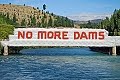
Contact has been investigating four main hydro options on the upper and lower Clutha, proposing dams at Tuapeka Mouth, Queensberry, Luggate and Beaumont costing between $300 million and $1.5 billion.
The schemes were mooted more than 20 years ago and originated from proposals by Contact's predecessor, the Electricity Corporation of New Zealand.
Ultimately, the Project Hayes decision would have an impact "when we're looking at starting to build, but we're nowhere near that stage", he said.
In the meantime, the company was consulting the community, and analysing options.
The community's views, technical and engineering studies and the effect on the environment were all factors which would be taken into consideration, Mr Gillespie said.
"Nothing's changed for us in what we're doing because of Meridian's decision."
Pioneer Generation chief executive Fraser Jonker said its plans for wind farms were on a vastly smaller scale than Meridian's.
The Environment Court decision in 2009, which cancelled resource consents for Project Hayes, saying the wind farm was inappropriate in an outstanding natural landscape, had influenced the type of wind farm proposals Pioneer had been investigating.
"We would never attempt to place a wind farm in that type of a landscape because it would be too much of hurdle to get it consented. "The projects we have under more investigation at the moment have taken that sort of landscape into consideration," Mr Jonker said.
Pioneer was still talking to several Otago and Southland farmers about the possibility of constructing small-scale wind farms on rural properties, along similar lines to its nine-turbine Mt Stuart wind farm in South Otago.
Monday, November 1, 2010
POWER Struggle
POWER Struggle
Saturday 30 October 2010
The Press
Wild river, a raft, a safety briefing.
Glenn Murdoch, our good natured and we hope responsible guide, goes through the drill. Forward paddle, backward paddle, hold, stop. Drambuie for everyone if you lose your paddle.
Then he gives us the worst-case scenario. This is when the raft capsizes with the crew in the river and not necessarily attached to the boat.
"Keep your legs in front of you and your head looking down the river," he instructs.
The chances of tipping our bulky craft seem remote to a rookie like me but Murdoch, I guess, has to go through the motions like a flight attendant giving a spiel about the aircraft crashing.
We are on the Mokihinui River, which is in a remote northern corner of the West Coast, about 40 kilometres north of Westport. The launching point for our expedition is well inland, just below the fork in the river where the North and South branches meet and just above the 16km Mokihinui Gorge.
If state-owned Meridian Energy wins the day, most of the gorge will flooded up to an 85-metre dam to be built about 15km from the river's mouth. The resulting 14km-long lake will inundate 225 hectares of pristine lowland forest and obviously the stretch of wild river we hope to travel.
Meridian has the project on first base by obtaining the required resource consents from the West Coast Regional and Buller District councils. In March, commissioners decided, two to one, to grant the consents. The Department of Conservation (DOC), Forest & Bird and Whitewater NZ are appealing and the Environment Court is expected to hear the case in 2012.
Forest & Bird field officer Debs Martin, who is sharing a raft with Green Party co-leader Russel Norman (among others), explains Meridian faces another difficult hurdle: for the dam to go ahead, Meridian needs either permission from DOC to flood the land or it needs to acquire the DOC land by swapping it for other land which will provide a net benefit to conservation. Meridian has offered 700ha of land, two blocks of which are in the Mokihinui catchment below the dam.
DOC has completed its evaluation and a draft report recommends a firm "no" to Meridian on all counts. The final decision must be made by the conservation minister.
Martin hopes the area will end up in a conservation park, a process that was "on the table" before Meridian began the consent process.
She accepts the minister could direct the department to withdraw but thinks that unlikely because DOC has thrown "unprecedented" resources at the fight.
It all looks very difficult for Meridian but its Mokihinui project manager, Chris Evans (not on the trip), who has worked on the project for four years, says Meridian will persevere, concentrating for the moment on the appeal. Meridian has withdrawn its DOC flooding application so it can enter more open discussions.
The search for land to satisfy DOC continues, he says: "It's not an easy task when DOC already administers 80 per cent of land on the West Coast."
Back at the river, the launch is getting closer. About 120 people have gathered for a 6.30am start on a dull but mercifully dry morning.
Evidence before the commissioners showed only about 300 people use the area each year. We are certainly going to boost the average.
The event has been organised by the Christchurch White Water Canoe Club, more as a statement than a protest. The assemblage has its fair share of greenies but white water people come in all sorts of political stripes. Norman is the only politician on the trip.
The first step is for the rafts and kayaks to be bundled into nets and slung beneath helicopters for the trip up to the forks. One whitebaiter has set his net in the river just below the very site where the gear and people are loaded. In a scene reminiscent of Apocalypse Now, three helicopters flying neatly behind each other descend in an urgent racket of whining rotors.
The white water people are obviously not keen on the power project. The proposed lake does not stop them using the higher and difficult North Branch of the river but it means they face a dull 14km flat paddle on the descent which is currently broken by numerous boulder- strewn rapids, quieter stretches of green water, sandy beaches, striking rock features and healthy bush.
They concede their kayaks and rafts are not often seen on the river. As the day of our adventure shows, getting kayaks and rafts up the river is a major and expensive exercise.
Although the commissioners saw the loss of white water recreation as a "significant effect" they considered the dam would provide "a more diverse range of opportunities to a much wider group of people".
Hugh Canard, a Christchurch economic development and tourism consultant, whose heroic organisational abilities make the Mokihinui statement such a success, doesn't buy that argument.
He likens his white water colleagues to the endangered blue ducks who will be supplanted by the dam lake.
"We have the same rights as anybody else. Numbers shouldn't come into it. We are saying we are the blue ducks who have been using the river and minding their own business. Then along comes whoever and wants to take it away. You're going to displace blue ducks and introduce mallards."
While a lake would no doubt increase patronage of the area, by that logic a gondola up Aoraki/Mt Cook would be fine because it would do the same thing for the mountain, he says.
In his view the commissioners overlooked that the Mokihinui is one of only three reasonably accessible rivers on the West Coast that can be used by the majority of competent kayakers.
People who want a lake experience on the coast are spoiled for choice with about 100 naturally formed lakes that are under-utilised, he says.
Canard, 68, who has been kayaking since his late 30s, worries the lake will end up like Lake Dunstan at the head of the Clutha Dam - "dead".
"In my lifetime I've seen one river after another either getting diverted, drained or dammed. We've only got 20 per cent left. That's why the Mokihinui is important."


