
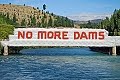
River Park sale agreed
Saturday 11 April 2015
Otago Daily Times
Contact Energy and the Red Bridge River Park Trust have
agreed on sale conditions for a parcel of Luggate land sought
by the charitable trust to develop a community river park.
The resolution follows more than a year of discussions
between long-term tenant of the land and trustee Lewis
Verduyn-Cassels and Contact over the proposed sale of the
0.4ha property.
Mr Verduyn-Cassels said the trust was grateful for the
support of the Wanaka Community Board and the many donors who
had made the project possible.
As the original proposal for the river park included
neighbouring land that was sold to other individuals, the
trust would look at revising the project plan to reflect the
changed ownership.
As part of the agreed sale process, the trust will pay a
portion of the market sale price of the land up front and
further settlement is due within the next five years.
Contact is also finalising arrangements to gift a separate
1.9ha block of land next to the Luggate Bridge to the local
community, most probably through the Queenstown Lakes
District Council.
Contact has been progressively selling parcels of land it
owns in the Clutha region in recent years, following an
announcement in 2012 that it was no longer going ahead with a
proposed hydro generation development in the area.
Saturday, April 11, 2015
River Park Sale Agreed

Thursday, April 9, 2015
Contact And Trust Reach Agreement
Contact and River Park Trust pleased to reach agreement
Thursday 9 April 2015
www.scoop.co.nz
Contact and
trustees for The Red Bridge River Park Trust this week have
agreed sale conditions for a parcel of Luggate land sought
by the charitable Trust to develop a community river park
involving native fauna and flora restoration and freshwater
ecology. The positive resolution follows over a year of
discussions between long term tenant of the land and trustee
Lewis Verduyn-Cassels and Contact over the proposed sale of
the 0.4 ha property.
“We’re very pleased to reach an
agreement that enables both parties to move forward
positively, with the Trust able to now explore its plans to
develop the community river park,” says Contact’s
Generation & Development Project Manager, Neil Gillespie.
“We are grateful to the many people behind the scenes
who have contributed their support to this agreement. The
Wanaka Community Board, and numerous donors, have all made
this project possible,” said River Park Trustee, Lewis
Verduyn-Cassels.”
“As the original proposal for the
river park included adjacent land that was sold to other
individuals, the Trustees will be looking at revising the
project plan to reflect the changed ownership. We literally
have decades of work ahead of us as we progressively restore
and enhance the Red Bridge area.”
As part of the agreed
sale process the Trust will pay a portion of the market sale
price of the land up front, with further settlement due
within the next five years. Separate to the sale to the
Trust, Contact is in the process of finalising arrangements
to gift a 1.9 ha block of land adjacent to the Luggate
Bridge to the local community, most likely through the
Queenstown Lakes District Council.
Contact has been
progressively selling parcels of land it owns in the Clutha
region in recent years, following an announcement in 2012
that it was no longer progressing a proposed Hydo generation
development in the
area.
About Red
Bridge River Park Trust
The purpose of the Red
Bridge River Park Trust is to create and manage a river park
and native recovery centre on riverside land at the Luggate
Red Bridge, on the Clutha Mata-Au River, for the benefit of
the community in perpetuity.
www.redbridgeriverpark.blogspot.co.nz
Friday, January 30, 2015
'Good progress' in talks on riverside land
'Good progress' in talks on riverside land
By Lucy Ibbotson, on Friday 30 January 2015
Otago Daily Times
An agreement over the future of a piece of riverside land
near Luggate wanted for a conservation park is still several
weeks away.
Negotiations have been ongoing for almost a year between
Contact Energy, the owners of a 0.4ha site next to the Clutha
River at the Luggate Red Bridge, and Lewis Verduyn-Cassels,
who established the Red Bridge River Park Trust to help
realise his vision for a community conservation area on the
land.
The trust was given several extended deadlines to raise
$300,000 to buy the land, before entering into private
discussions with Contact towards the end of last year.
Contact's trading, development and geothermal resources
project manager, Neil Gillespie, said this week the power
company was ''still talking'' with Mr Verduyn-Cassels.
''We're making good progress.
''In the next three to four weeks we should be closer to
knowing where we're at.''
Wednesday, October 1, 2014
Purchase Good Despite Shock Cost
Purchase 'good result' despite shock cost
By Marjorie Cook, on Wednesday 1 October 2014
The Southland Times
After lengthy secret negotiations, the Department of Conservation
yesterday announced the Nature Heritage Fund had spent $935,000 on 164ha
of Contact Energy land near the Luggate Red Bridge to add to the public
conservation estate.
Emeritus professor of botany Sir Alan Mark, of Dunedin, welcomed the
purchase as significant but questioned whether taxpayers should have
had to pay that much.
"The sum involved of $935,000 sounds a lot to me.
"That must be current land valuations . . .
"The end result is good but the means still leaves a lot to be required," Mark said.
Many other people signed an open letter to Contact Energy recently,
suggesting that, among other things, it could discount the purchase
price because of the substantial profits the company had made from
electricity developments on the Clutha River.
The announcement was still pleasing and he was surprised it had not
been made by the minister of conservation before the election.
"It is certainly quite a significant area and there are no doubts it has very high conservation values," he said.
DOC's Wanaka conservation services manager Chris Sydney said getting the land was a great outcome for conservation.
"The Upper Clutha Basin is recognised as an outstanding natural
landscape with biodiversity features of national, regional and local
importance," Sydney said.
The Nature Heritage Fund purchase was for some but not all of the
properties Contact Energy decided in 2012 it no longer required for dam
building. Some sites have significant historical or recreational value
while others have important biodiversity values.
Sydney said the combined values of the land meant they were considered to be of national importance.
The properties provided river access and included significant river terraces and dryland vegetation.
Eight threatened and uncommon plant species and several historical features were contained on the land.
The sites also had high strategic value next to marginal strips along the Clutha/ Mata-Au River, Sydney said.
FAST FACTS
The Nature Heritage Fund is a contestable ministerial fund that seeks to protect New Zealand ecosystems.
It has received 1352 applications since its inception in 1990, protecting 340,780 hectares of indigenous ecosystems.
It has spent $158.45 million so far (about $465 per hectare).
Source: 2013 DOC annual report
SPECIAL STATUS
Where: 13km east of Wanaka, on the true left of the Clutha River.
What is protected: goldmining archaeological sites, dry-land terrace vegetation, and a "national critical" ecosystem.
Endangered plants include: Annual forget-me-not (Myosotis brevis,
status – nationally vulnerable), mousetail (Myosurus minimus ssp
novae-zelandiae, status – nationally endangered), Olearia lineata
(status – declining), and Cushion pimelea (Pimelea sericeovillosa ssp
pulvinaris, status – declining).
Friday, March 28, 2014
Ruling Expected Today ...
Ruling expected today on land-clearance caseBy Lucy Ibbotson, on Friday 28 March 2014
Otago Daily Times
Should farming activities or protection of indigenous
vegetation take priority on a contentious piece of privately
owned land at Hawea Flat?
That is the question the Environment Court will answer today,
in a decision Judge John Hassan says is ''by no means an easy
one''.
The ruling could have significant implications for the
farming industry if an interim enforcement order issued
against farmer Dougal Innes earlier this month is upheld,
lawyer Graeme Todd submitted to the court in Queenstown
yesterday.
The order was obtained by the Royal Forest and Bird
Protection Society of New Zealand, which considers protecting
the indigenous vegetation on Mr Innes' land a matter of
''national importance''.
Mr Innes had already disced a large part of the site before
his farming activities were halted by the order, which he has
applied to the court to have cancelled.
In closing submissions, Forest and Bird lawyer Sally Gepp
said the consequences of Mr Innes not being able to cultivate
his land this year should not override a clear breach of the
district plan, the adverse effects already caused at the site
and the further effects which would occur if the order was
cancelled.
''Protection of significant indigenous vegetation is a matter
of national importance which all decision-makers must
recognise and provide for,'' Ms Gepp said.
The most appropriate forum for considering Mr Innes' proposed
farming activity was a resource consent process where all
parties could have a view on the matter through notification.
''[Mr Innes] is required to seek consent for indigenous
vegetation clearance like any other person.''
It was ''not an ex-appropriation of his rights'', but rather
a normal and legal application of the district plan.
Mr Todd, who is acting for neighbouring landowner and
interested party James Cooper, said the significant question
if the interim order was upheld was: which landowner in the
district would be next?
''If farmers are required to spend thousands of dollars
applying for resource consents for every act of clearance of
their land and if their ability to cultivate and farm their
land is curtailed by a standard that they are not allowed to
clear pasture even if a few indigenous species are present on
a site, this has significant implications for the farming
industry not only in this region but in other regions.''
Mr Innes' lawyer, Jan Caunter, said Mr Innes had ''asked all
of the right questions and sought advice from all the right
places'' on matters relevant to buying the property and which
might have affected his ability to use it.
''He sought LIM reports which did not alert him to the
presence of indigenous vegetation on the site. It did,
however, alert him to activities that had previously been
approved on the site, which were in many respects similar to
what he wished to do,'' Ms Caunter said.
''[He] received what essentially amounted to 'yes, you can go
ahead'.''
Federated Farmers lawyer Richard Gardner said because the
land had been used for primary production purposes for a long
time and cultivated on occasion for those purposes, Mr Innes'
claims to existing use rights were ''well founded''.
''There is no basis upon which the interim enforcement order
can be sustained ... Mr Innes and the other farmers in the
Queenstown Lakes district who are concerned about the
implications of the interim enforcement order should be left
to go about their lawful farming activities,'' Mr Gardner
said.
Further consideration was given to a compromise, as mooted by
Mr Todd on Wednesday.
Judge Hassan asked three ecologists - who were appearing for
the council, Mr Innes and Forest and Bird - their view on an
appropriate width for a possible buffer zone on the southern
boundary of Mr Innes' property, to protect indigenous
vegetation on neighbouring land owned by Contact Energy.
Their opinions ranged from 20m to 200m.
Saturday, January 11, 2014
Beaumont's Rising Fortunes
Beaumont's Rising Fortunes
By John Gibb, on Saturday 11 January 2014
Otago Daily Times
Moves are afoot to make the small Otago township of
Beaumont the thriving community it once was. John Gibb finds
out about Beaumont's changing fortunes.
Once a fading rural backwater, the township of Beaumont now
seems destined for a much brighter future.
People who have lived near the inland Otago township, on the
Clutha River/Mata-au, for 20 years or more will remember
earlier sometimes divisive and frustrating conflicts over
proposed big hydro-electric dams, which would have flooded
the area.
One proposal, by the Electricity Corporation of New Zealand
(ECNZ) in 1992, was to build a dam at Tuapeka Mouth that
would have flooded 3000ha, including all of Beaumont. But
among a series of more promising developments the
long-delayed replacement work involving the nearby 19th
century Beaumont Bridge is at last due to start next year.
This is one of the oldest bridges in the country still
operating on a major state highway.
And more walkers and cyclists are already starting to move
through the township since the 73km-long Clutha Gold Trail-
which runs between Roxburgh and Lawrence, and includes
Beaumont- was opened by Prime Minister John Key on October
24. Long-time resident, historian and writer Bill Dacker (61)
is well aware of the area's previously somewhat mixed
fortunes.
''It was a little backwater that we enjoyed as a backwater,''
he recalls.
But then a series of dam proposals came along and changed
everything, he said.
Some locals, including some facing tough economic times, had
agreed to sell their land.
Others, including the ''Hands Off Beaumont'' lobbyists, were
determined to resist and to safeguard all they found precious
in the area, including its rich history and its attractive
and distinctive environment.
Mr Dacker highlights the significance of the bridge
replacement work.
The current bridge had been around since 1887 and had
struggled to cope with some of the ''huge trucks'' now
passing through.
Mr Dacker, who is a long-standing member of the Clutha Gold
Trail Trust Board, says the newly opened trail and other
developments mean brighter times are coming for Beaumont,
which will boost the local economy by bringing in more
visitors and potential new residents. Strengthening Beaumont
was also important strategically, because it gave the area a
better chance of influencing its own destiny in future, he
said.
''Unless we're going to make the place strong in a different
way, other people are [still] going to see it as a
backwater,'' he says.
Dave Crawford is an experienced jet boater and
co-owner-operator of Beaumont Jet, with his wife Ali, And he
is also a Gold Trail board member.
It was ''great'' to see the cyclists already starting to flow
along the track, through Beaumont.
''It can only be good for this area,'' he says.
When he and his wife moved to Beaumont and began jet boat
operations in 2004, he had long known the area had strong
potential.
The nearby Clutha River/Mata-au is ''probably the best part
of the Clutha River'', he adds.
These stretches of the river were also as good as ''anything
in New Zealand'' and offered plenty of variety, including
''huge rapids'' and other ecologically appealing areas.
And he is not content with Beaumont being one of the region's
and New Zealand's best-kept secrets.
''The more people the better.''
Mr Dacker, who these days divides his time between Beaumont
and Port Chalmers, has lived in Beaumont for much of his
life, having grown up there.
His father, Harry Dacker, had initially found work there as a
rabbiter in the 1920s.
Bill Dacker said the idea of building a''cycle-cum-walking
trail through the district, along the river and through the
farmland to Lawrence, was a direct response - a way of
creating economic opportunity by bringing people into this
area as well as the other areas connected by the trail''.
The idea had come from the trust's Roxburgh-based chairman,
Rod Peirce, who was a ''retired orchardist from Millers Flat
with long-standing connections in Beaumont as well as to the
other communities along the trail.''
The lessees of the Beaumont Hotel had also contributed to the
upturn in Beaumont's fortunes by continuing to develop and
support ''events tailored to hunters and fishermen while
adding cyclists to those they wish to give hospitality to''.
And the pub also served ''the best blue cod meals this side
of Iceland'', Mr Dacker said.
Widespread support from the Beaumont community for the trust,
as well as backing from ''other communities connected by the
trail'', had been key to the success of the trail
development.
This sense of unity and support stood in ''stark contrast to
divisions in the communities'' sparked by the ECNZ dam
proposal in 1992, and was ''a wonderful thing to
experience''.
Alison Mills, who leases the hotel with her husband, Gunni
Egilsson, is also optimistic about the future, and says
patrons with different interests and from range of
backgrounds, including tourists, were using the hotel and
nearby camping ground.
Mr Dacker noted there had been some ''recent controversy''
over suggestions of fees for using the trail.
He emphasised there was no official fee for using it, ''but
the trust asks for a koha [donation], a contribution for its
maintenance from its users as at the moment the trust is
solely responsible for costs of its maintenance''.
Mr Peirce (76) said there were early signs that the new trail
would prove positive, and help revive smaller communities
such as Beaumont and Millers Flat.
''It's very satisfying. There's a general air of
enthusiasm.''
Mr Peirce, who was also once chairman of the Friends of
Beaumont group, had opposed various proposals to establish
big new dams nearby.
And he is positive about the new trail's benefits.
''I thought, if there's any legacy I can leave, it may well
be more like the trail, which is more positive, rather than
being an activist against everything.
''I'd like to be seen as someone who left something for the
benefit of the community.''
People were already starting to come from far afield to ride
or walk the new trail, and local families were also enjoying
it.
''We've had a tremendous amount of support from Contact
Energy.''
And $3.8 million from the Government's New Zealand Cycle
Trail project funding had been used to support the trail's
development. Through the years Mr Peirce has noticed rural
decline, including loss of population and services, in some
of the smaller communities.
''It's very positive. I think that the smaller villages will
definitely gain a tremendous amount over the next several
years and into the future from the trail.''
And Beaumont was already looking up. The school had closed
some decades ago, but ''rural visitors'' were increasing and
the pub was humming - ''it's quite a busy little pub'', Mr
Peirce said.
The gold trail was also good for Millers Flat - ''it's the
only town that the trail actually goes right through the
middle of.''
And Mr Dacker highlights Beaumont's distinctive geographical
position, and its historical significance.
Beaumont is the first crossing place of the Clutha
River/Mata-au when travelling on SH8 from Milton to Central
Otago, and its many attractions. And the area was ''one of
the major entrance and exit points'' for the Clutha Gold
Trail walkway.
The Clutha River/Mata-au is one of the outstanding natural
features of the newly opened trail, which follows the river
''on its journey across the river flats below Roxburgh,
through the Beaumont Gorge, before it turns toward Lawrence
at Beaumont'', Mr Dacker says. The river crosses the Beaumont
Flat and then passes through the Rongahere Gorge, the ''last
major river flat and gorge respectively of the schist
peneplain or block mountain system of the Central Otago
highlands''.
Beaumont was a true border between very different
geographical zones.
''On the Rongahere side the climate is wetter and cooler,
more like that of coastal Otago than Central Otago. On the Beaumont Gorge side the climate is hotter and drier,
marking the beginning of Central Otago proper.''
The Maori name for the district is Te Kohai and here the
ancestors of Kai Tahu Whanui also crossed the river, but on
mokihi (traditional rafts), on their journeys into the
interior.
There was also once a moa-hunting era village at Beaumont.
The town of Beaumont grew around the river crossing, where a
ferry operated, accompanied by a supporting structure of
hotels and shops. The natural vegetation of the nearby gorges
reflected the ''borderland'' characteristics.
The dominant tree on Upper Birch Island - also known locally
as Native Island - in the Beaumont Gorge is mountain beech,
indicating the drier and hotter conditions there. The far
larger Birch Island, or Moanui, in the Rongahere Gorge below
Beaumont, and the bush of the gorge itself, has a covering of
a mixed podocarp forest that includes sphagnum moss, mountain
and silver beech as well as totara and matai.
''Both the gorge and the island are home to rare and nearly
extinct insect species, protected on the island from rat
predation by the swift waters of the river,'' Mr Dacker says.
''Beaumont's fortunes have fluctuated over the years
according to major changes in the economic, gold-mining and
agricultural history of the province.''
First the search for gold, then the arrival of the railways
and the rise of horticulture on the river flats of Central
Otago followed by the development of exotic forest
plantations in the Blue Mountains all contributed to its
growth.
But, subsequently, the closure of the railway branch line,
the decline in gold extraction, the rise of large land
holdings, changes in the horticultural sector, and finally
the closure of the Beaumont Forest headquarters had also
contributed to the community shrinking.
Closures of the railway, shops, the race track, churches and
the school had all followed ''but always a significant
minority clung on'' and many people, including some who had
left, showed ''a remarkable dedication to the area'', Mr
Dacker said.
And he emphasises that, for the first time in 40 years, there
were ''signs of growth at Beaumont again''.
Margaret Healy, who helped organise a series of ''Back to
Beaumont'' days, held over the years, has always been
optimistic about the township's future.
''The aim is to get people and their families to come back to
their grassroots, reminisce and enjoy Beaumont,'' she said.
It was a great place to raise a family and she was keen for
Beaumont to become a ''thriving community'' again.
Beaumont
• Beaumont is a township on State Highway 87, at a crossing of the Clutha Mata-Au River, close to Central Otago, between Balclutha and Roxburgh, and is 6km southeast from Raes Junction.
• The township is one of the main entry and exit points on the 73km-long Clutha Gold Trail, between Lawrence and Roxburgh.
• The gold trail's development was backed by $3.8 million in New Zealand Cycle Trail project funding and was opened by Prime Minister John Key in October.
• The trail includes parts of an old Maori trail, sections of the former railway line route, and parts of a former road.
• An earlier proposal in 1992 by ECNZ was to build a dam at Tuapeka Mouth that would have flooded several thousand hectares, including all of Beaumont.
Tuesday, August 13, 2013
Albert Town Hit Hardest If Dam Fails
Albert Town hit hardest if dam fails
By Sarah Marqet, on Tuesday 13 August 2013
Otago Daily Times
If the Lake Hawea Control Dam were to fail, up to 420
properties and 2620 people could be affected, a Contact
Energy-commissioned report says.
The September 2011 report outlines potential consequences of
a dam failure and was required as part of the energy
company's standard practice, not because of any concerns with
the dam.
It has been made public now due to its inclusion in the
agenda for the Clutha Management Committee meeting on Friday.
Albert Town, situated at the confluence of the Hawea and
Clutha Rivers, would be the town most affected, with possibly
158 to 230 properties, two hotels and a campsite flooded.
However, providing a breach of the dam was noticed when it
first happened, there would be a three-hour window before the
flood waters reached the town, allowing time for evacuation.
Depending on initial water levels in Lake Wanaka, there could
also be extensive damage through Wanaka town with 60
buildings, including hotels, cafes and a supermarket,
affected.
Because of the large storage capacity of Lake Wanaka, it
would be three days before the peak level was reached.
Three bridges across the Hawea and Clutha Rivers would
probably be destroyed by the flood but the one on State
Highway 8B at Cromwell would not.
The ''flood wave'' travel time from Lake Hawea to the upper
reaches of Lake Dunstan would be seven hours, allowing plenty
of warning time for Contact Energy to increase the flow of
water through the Clyde Dam to lower the level of the lake.
The Clyde Dam is 94km downstream of the Hawea dam.
Water would flow over the top of the Clyde Dam (overtopping)
for up to 26 hours, but it had been designed to withstand
this.
Severe bank and river bed erosion could occur, as could
deposits of debris due to the ''heavily wooded banks''.
The report, by AECOM New Zealand Ltd, used two dam-failure
scenarios - an earthquake-induced failure and a failure
induced by high lake levels following a ''probable maximum
flood event''.
It was the latter failure that would cause the most damage.
The Lake Hawea Control Dam is an earth-fill dam. The report
says failures of that kind of dam are ''extremely rare but
have occurred in the past as the result of internal erosion
or overtopping''.
Monday, July 2, 2012
Contact Set To Sell Clutha Properties
Contact set to sell Clutha properties
By Mark Price, on Monday 2 July 2012
Otago Daily Times
One of the biggest private owners of land and assets along the Clutha River, Contact Energy, has begun disposing of land it no longer requires.
Contact announced in May it had "withdrawn plans" for further hydro development on the Clutha River and said it would review management and ownership of some of its land holdings near the river.
Spokeswoman Janet Carson said at the weekend the company had identified "some properties" in the lower Clutha it was considering for sale, and was reviewing its upper Clutha holdings.
"We are working with current lessees to establish their interest in the first instance. Properties for potential sale will be considered on a case-by-case basis."It is understood some lease-holders were sent letters about the sale process in December.
Affected lease-holders contacted yesterday did not want to comment.
While it is not clear which of its properties Contact is looking to sell, the ODT has obtained information from a property sales database which shows clearly for the first time the extent of the Wellington-based energy company's total Otago property holdings.
Although the nature of holdings is not identified specifically in the database, they do include land bought for hydro development.
The database shows Contact has 147 individual properties in Otago, covering 13,912.25ha, and valued at $700,860,500. Included are $432,450,000 for the Clyde Dam and $200,000,000 for the Lake Roxburgh village.
The dams aside, the capital value of Contact's Otago properties is $68,410,500. The property is almost entirely between Luggate and Beaumont, with a small amount in Dunedin.
Contact has previously declined to comment on the size or value of its Clutha portfolio but has stated it inherited the land from the Government-owned Electricity Corporation of New Zealand, which was split up in 1996.
Although figures from the database do not show what improvements have been made to the land, most values now are considerably higher than the "gross purchase prices" listed:A 1.8ha property at Luggate bought in 1982 for $30,246 is now valued at $365,000.
A 88.83ha property at Mt Pisa bought in 1989 for $871,875 is now valued at $1,183,000.
A 5.6ha property bought at Wye Creek, Queenstown Lakes, for $8500 in 1985 is now valued at $1,025,000.
However, some appear to have declined over time.
A 1.32ha property at Beaumont was bought in 1993 for $195,000 and is now valued at $62,500.
A 191.16ha property at Ettrick was bought in 1995 for $885,000 and is now valued at $620,000.
A property of 0.13ha bought at Springvale in 1989 for $86,000 is now valued at $15,000.
Co-ordinator of the Clutha River Forum Lewis Verduyn reiterated at the weekend his call for an "ethical repatriation of lands".
He said much of the land had been "seized" in the 1980s with some land owners "literally made tenants on their own land".
--------------------------------------------------------------------------------
Contact's 157 Otago properties, classified by the ODT according to approximate location, include:
Luggate Properties: 10; area: 191.49ha; capital value*: $5,558,000
Hawea Flat Properties: 2; area: 33.09ha; value: $290,000
Mount Pisa Properties: 6; area: 454.95ha; value: $11,483,000
Queensberry Properties: 2; area: 2.83ha; value: $480,000
LowburnProperties: 14; area: 5950.74ha; value $5,948,000Cromwell Properties: 2; area: 9.59ha; value: $1,855,000
Queenstown Lakes Properties: 5; area: 87.32ha; value: $3,038,500
Kawarau Gorge Properties: 2; area: 204.27ha; value: $2,300,000
Other Central Otago Properties: 9; area: 2308.76ha; value: $2,603,500
Clyde Properties: 2; area: 122.86ha; value: $432,990,000
Galloway Properties: 1; area: 15.66ha; value $110,000
Lake Roxburgh Village Properties: 1; area 63.5ha; value: $200,000,000
Teviot Properties: 1; area: 2.22ha; value: $225,000
Letts Gully, Central Otago Properties: 3; area: 8.33ha; value: $312,000
Springvale Properties: 2; area: 4.61ha; value: $245,000
Ettrick Properties 10; area: 786.21ha; value: $2,928,000
Millers Flat Properties: 30; area: 186.12ha; value: $4,250,000
Craigellachie Properties: 6; area: 1656.78ha; value: $6,442,000
Beaumont Properties: 19; area: 315.56ha; value: $4,160,000
Kononi Properties: 1; area: 70.13ha; value: $85,000
Evans Flat Properties: 4; area: 3.72ha; value: $108,500
Island Block Properties: 7; area: 489.21ha; value: $3,102,000
Raes Junction Properties: 1; area: 55.64ha; value $705,000
Rongahere Properties: 4; area: 884.22ha; value: $11,525,000
*values as per current GVs
Saturday, June 2, 2012
Contact Downgraded As Demand Slides
Contact downgraded as demand slides
By Dene Mackenzie, on Saturday 2 June 2012
Otago Daily Times
Electricity generator Contact Energy is expected to have a better 2012 financial year following strong operating statistics in April and May but Forsyth Barr broker Peter Young says the lift still feels short of what he expected.
Forsyth Barr is forecasting operating earnings for the year ended June 30 to $498 million, up 4.1%, but has lowered the 2013 forecast by 8.1% to $514 million.
Mr Young has also dropped the valuation of the company by nearly $1 a share to $5.89.
Contact last traded at $4.80.
The revised 2012 forecast was "comfortably below" market consensus following Contact's 2011 result of $520 million and even more so given the lift Contact was receiving from running its thermal fleet hard and collecting the current high wholesale prices, he said.
The second half of the 2012 financial year had been an interesting period to analyse because it was the first period since 2008 when hydrology had been dry for a prolonged period of time, conditions that should suit Contact.
However, things had not worked out as expected. Since the beginning of February, hydro inflows had been substantially lower than 2008.
In 2008, inflows were 77% of average compared to 72% in 2012.
"In fact, lake inflows are creating new record lows and we expect Clutha generation to be in the bottom 1% of outcomes.
The inflows Contact is experiencing are a one-in-100-year event," he said.
Despite the record low inflows, wholesale prices in 2008 were substantially higher in 2012. Only since the start of May had 2012 prices started to show any significant increase.
In the case of Benmore prices, that was aided by a weekend outage and some "interesting pricing" in the South Island reserves market, Mr Young said.
There were two reasons why lake levels were holding up significantly better in 2012 than 2008.
First, demand was weaker and secondly, lake levels were substantially higher than 2008 because of the level of new building that had taken place and strong North Island hydrology.
Since the start of February, there had been an an additional 1600GWh produced from new geothermal and wind construction and North Island hydro compared to 2008.
"In simple terms, better-than-expected lake levels have translated into lower-than-expected wholesale prices, which has meant Contact's second-half earnings, while good, are lower than we would have thought."
Mr Young said that since 2008, Contact had struggled to meet earnings expectations.
Looking ahead, the electricity market was facing two fundamental problems - it was oversupplied and demand was low.
In addition, new generation was continuing to come on stream.
At the end of this year, Todd Energy was commissioning its 100MW gas-fired peaking plant and in the middle of next year, Contact would commission its 114MW (net generation) Te Mihi geothermal plant and Mighty River Power its 82MW Ngatamariki geothermal plant.
Since 2007, nine "must-run" generation plans had been built and no significant plant had been decommissioned and demand had flat-lined, he said.
Must-run generation was typically bid into the electricity market at or close to $0 per MWH, pushing out of the market more expensive generation and lowering spot market prices.
While new must-run generation continued to be built, it appeared there was a risk the market might continually underprice thermal generation.
The closure of the first Huntly coal unit would help but for most of the year, there had always been one Huntly coal unit out of action and the wholesale electricity market had not spiked very high, Mr Young said.
"Until demand picks up and mops up the excess generation in the market, we believe wholesale prices will remain suppressed.
"We could be looking at four to five years before the market starts to get back to equilibrium and that assumes no new generation is built during the interim."
That was an issue for Contact given it had long-generation assets and a large thermal fleet not well suited to excess generation in the market.
Thermal fleet made most of its money in dry years when generation was short.
It was the reason why Contact was keen to increase gas flexibility and lower the average cost of generation, Mr Young said.
Saturday, May 5, 2012
Bridges' Future Unaffected
Bridges' future unaffected
By Helena de Reus, on Friday 4 May 2012
Otago Daily Times
Contact Energy's recent announcement it is shelving plans for further development on the Clutha River will not affect the future of two Clutha bridges.
The 124-year-old bridge at Beaumont and the Clydevale Bridge, both one-lane bridges which span the Clutha River, are scheduled for replacement or upgrading.
Earlier this week, Contact Energy announced it had withdrawn plans for further hydro development on the Clutha River and it would review management and ownership of its land holdings near the river.
A search of property records by Clutha District Council staff showed Contact Energy held 37 properties in the Clutha district totalling 2989ha and with a capital value of $26.3 million (figures from 2008). It is unclear how much of this property was earmarked for use in potential dam projects at Beaumont and Tuapeka Mouth.
New Zealand Transport Agency acting Otago-Southland state highways manager Ian Duncan said Contact Energy's recent announcement it was shelving plans for the Clutha River would not make the replacement bridge at Beaumont a higher priority.
Mr Duncan said the agency was still looking at building a new bridge at Beaumont in the 2017-18 financial year. Investigation work was scheduled to begin by 2014.
The Beaumont Bridge is funded solely by the NZTA.
Clutha District Council district assets manager Jules Witt said the Clydevale Bridge already had "reasonably high priority" with the Otago Regional Transport Committee and he did not believe the bridge would have been affected even if Contact Energy's developments had gone ahead.
Last year the Clutha District Council decided to upgrade the Clydevale Bridge to class 1 load capacity. Strengthening the bridge to class 1 would cost about $974,000. The council's share was estimated to be $390,000. NZTA would foot the remainder of the bill. The decision whether to build a new bridge would be reconsidered in 20 years.
Mr Witt said the council had budgeted for the strengthening and repairs in the 2012-13 financial year.
Thursday, May 3, 2012
Call For Ethical Repatriation Of Land
Call for ethical repatriation of land
By Marjorie Cook, on Thursday 3 May 2012
Otago Daily Times
Contact Energy's review of its Clutha River land bank has sparked calls for the electricity generator to be a "responsible corporate citizen" and repatriate land ethically, while securing critical public access easements.
Contact Energy confirmed this week it had withdrawn plans for further dams on the river and would include its land holdings in a review of its $100 million national property portfolio.
Contact group communications manager Janet Carson yesterday declined to comment on the value and size of the Clutha portfolio, but confirmed "all the land was inherited" from Electricity Corporation of New Zealand and "includes parcels in the Clutha, Central Otago and Queenstown Lakes regions".
The holdings would be "sold as appropriate over time" and there was no end date for concluding the process, Ms Carson said.
The Otago Daily Times understands Contact Energy owns 95 properties in the Central Otago and Queenstown Lakes districts and another 40 in the Clutha district.
They include everything from farms to town sections.
It is also understood some of Contact Energy's larger properties around Beaumont are in discussion and valuation for sale back to farmers, while smaller properties nearer the waterline are believed not to be on the market.
Clutha River Forum co-ordinator Lewis Verduyn, of Wanaka, said yesterday the land bank review "has the potential to become a highly contentious issue" and warned how Contact proceeded could "stir up further resistance, or calm the waters".
"Much of the approximately 4400ha of land held by Contact along the Clutha was seized in the 1980s and some has subsequently been leased or rented back to the original owners, who have been subjected to a considerable cost.
"These people were literally made tenants on their own land, and they could now be shafted again if Contact opts for a quick capital sell-off.
"Long-term tenants are in a similar situation, having invested in their leased properties, while for many years their corporate landlord ignored them.
"But Contact could also act as a responsible corporate citizen by building community relations through the ethical repatriation of land.
"The occupants of this land, including farmers, should be able to purchase it on fair terms that acknowledge their investment in it.
"Such terms should include the option to purchase on a lease-to-own basis, with consideration given to the significant moneys already paid.
"Much of the Contact land within the river corridor is also critical to public access and should be vested in the conservation estate to be managed by Doc, along with adjoining public conservation lands.
"This would add considerable surety to the viability and success of river trails presently being constructed by community groups.
"All this could be done while retaining rights for future hydro development, though I can't envisage that happening," Mr Verduyn said.
Upper Clutha Tracks Trust chairman Tim Dennis, of Wanaka, said yesterday Contact Energy had supported the trust's projects and provided access easements.
It was now time for anyone with informal public access across Contact Energy's land to "shore up" those easements, he said.
"But I can't imagine they will get rid of their land any time soon.
"They might decide they want to hold on to it for another 10 to 20 years.
"The consenting environment might change, the energy demand might change.
Once it is sold, it will be hard to get it back," Mr Dennis said.
Otago Federated Farmers president Mike Lord, of Outram, said farmers would be "waiting with interest" to see what Contact would do.
"These things can take quite a bit of time and it is not going to be a quick process.
"A lot of that land is leased out and not all the leases will expire tomorrow.
"It is an opportunity for those lessees to be able to buy in, too," Mr Lord said.
Former landowners who felt squeezed off the land might now feel some bitterness and it might well be that land could be offered back to those people, he said.
Other options might include selling the entire Clutha portfolio at once to another power generator, such as Meridian, entering into sale agreements with lessees, putting the land on the open market or offering it in a ballot, he said.
"If I was Contact, I would be looking for the best value that I could. I would be looking at all the different options," Mr Lord said.
Mr Lord said it would be prudent for Contact Energy to finalise access easements before selling the land, to avoid problems down the track.
Wednesday, May 2, 2012
Windfall For Contact Shareholders
Windfall for Contact shareholders expected
Tuesday 1 May 2012
TVNZ ONE News
Contact Energy shareholders can expect a substantial boost to cash flow from 2014 onwards as the company completes geothermal projects, winds back major capital spending and seeks to sell some of its $100 million of development land holdings.
The company's decision to all but abandon long-held hydro-electricity developments on the Clutha River was part of a wider drive to strip capital project costs out of the business for the time being, said chief executive Dennis Barnes.
Contact cited weak national electricity demand, the challenge of gaining resource consents and better options elsewhere for putting on ice hydro-electricity projects that could potentially double its output from the Clutha River, and beginning a process of selling land holdings in the area.
The Clutha options were not commercially viable "in the foreseeable future".
Contact already has 752 MW of installed capacity at the Clyde and Roxburgh hydro stations on the Clutha, and inherited options for developments at Tuapeka Mouth, Beaumont, Queensberry, and Luggate totalling 763MW when it was corporatised in the mid-1990's.
Since then, the company has periodically examined its Clutha options, while fending off criticism from local communities that a lack of clarity about its plans was impeding economic development.
A review of calculations last made in 2008 had shown roading infrastructure costs would be far higher than originally estimated, while the size of each project was too large to consider building for the foreseeable future.
Asked whether the decision signalled the end of "big hydro" in New Zealand, Barnes said: "I don't believe so, but I can't answer the question for 15 to 20 years."
It would be 2025 "at the earliest" before any of the Clutha options made sense to re-examine.
"We will stop spending money on it," he said. "Project development pipelines need to show a return and we needed to take the community to an honest point.
We decided we wouldn't do any work for seven, eight or 10 years, and it was fair to tell them that."
Contact also had more attractive geothermal and wind development options than any of its large hydro prospects, although it has extended for one year its resource consents on a small hydro scheme attached to the control gates on Lake Hawea, the only controlled storage lake on the Clutha system.
Barnes said one of his chief tasks in the last year had been to strip out capital development costs from the business, and to start implementing a more active land management policy to rationalise the company's approximately $100 million portfolio of development and other land holdings around the country.
The Clutha decision is still a step away from complete abandonment, with Contact proposing in some cases to sell land with encumbrances either to allow a future hydro development or preventing sale to a competing hydro developer.
"A dammed river is a very significant energy resource and will have a value over a timeframe," he said.
The company is taking a similar approach to land purchased for its mega-wind farm development in the North Island, on the coast north of Raglan, selling property with a future development right attached.
Contact owned only about 20% of the land it required to build any of the proposed Clutha dams.
No decision had yet been made on exactly how much of its land holdings would be marked for disposal, Barnes said.
He conceded also that resource consents in the lower South Island were likely to take longer and be more costly to obtain than in some other parts of the country.
"Our view is that if you take your time and are transparent, they are consent-able," he said. "But in that part of the country, the community conversations take longer and cost more. It's different from Wairakei, where the community embraces geothermal development."
Barnes said that once the 166MW Te Mihi geothermal plant was completed in 2013 that would bring to an end four years in which Contact had committed an average of $500 million of capital annually.
"It will drop to $100 million or less. The balance goes to cash flow. You will see that very strongly in 2014."
Contact shares traded unchanged at $4.85 on the NZX and have declined about 8% this year.
Contact Should Atone: Resident
Contact should atone: resident
By Lynda van Kempen, on Wednesday 2 May 2012
Otago Daily Times
Beaumont resident Margaret Healy says she can finally "chuck away the snorkel" after living for years with the threat of the area being flooded if a hydro dam was built on the Clutha River nearby.
Contact Energy announced on Monday it was dropping its plans for further hydro development on the river, saying none of the options for dams at Beaumont, Tuapeka, Luggate and Queensberry were viable "in the foreseeable future".
Beaumont residents and former residents who opposed further hydro development on the Clutha welcomed the decision as "long-awaited and absolutely marvellous", said Mrs Healy, who is the secretary-treasurer of the Beaumont Residents Group.
It had been daunting to live for the past 20 years with the prospect of a dam that might flood the area "hanging over" them.
Contact owed Beaumont some compensation for the impact that uncertainty had had on the community, she said.
"The threat of the dam has changed the whole area and influenced a lot of things over the years, including the population in the area. The local shop closed as well as the school, and people stopped buying land here and took out orchards. We feel Contact owes us some compensation to make up for all that."
Compensation could take the form of the community being "gifted" the former shop building, which was owned by Contact, or the company could contribute to a new roof for the Beaumont Hall, Mrs Healy said.
Asked whether Contact would offer any "compensation" to Beaumont, Contact group communications manager Janet Carson said: "We're part of this community and contribute where we can.
"We have been working with locals about the shop for some time and will continue to see what's possible.
"We have also, just today, received a request for assistance with other [Beaumont] community-related matters, which we are also considering," she said.
Contact was involved in community projects throughout the region but the contributions it made should not be viewed as "compensation", she said.
Mrs Healy said Beaumont was a special place and she had received a steady stream of emails and phone calls yesterday from people saying they were "delighted" at the cancellation of the dam plans.
"Lots of them were people who used to live here.
"One even said, 'Hooray, I can still be buried in the Beaumont cemetery when I die'."
Under the proposal for a dam at Tuapeka Mouth, the cemetery would have been flooded, along with the Beaumont township.
Mrs Healy and her husband have lived on a 0.4ha block of land near the Beaumont bridge for the past 35 years.
Plans for a Tuapeka dam were first mooted in 1965 by Contact's predecessor, the Electricity Corporation of New Zealand, and the project has been reconsidered several times since then.
"It appears that threat of a dam has been virtually removed now that Contact is concentrating on other energy projects like geothermal projects," Mrs Healy said.
"We used to joke we'd be well under the water here and we'd need a 30m snorkel ... well, now I can chuck away the snorkel."
There would be nothing holding back progress in the area now that uncertainty was gone, she said.
People would be able to plan for the future and buy and sell land freely.
Decision On Dams No Surprise
Decision on dams no surprise
By Lucy Ibbotson, on Wednesday 2 May 2012
Otago Daily Times
Contact Energy's decision to drop its hydro development plans for the Clutha River has come as no surprise to local government leaders in the district.
Clutha Mayor Bryan Cadogan had been "semi-aware" of Contact's intentions for some time.
He said the prospect of dams on the Clutha River had "polarised the community", and it was good to have some closure on a long period of uncertainty.
"I suppose if nothing else it gives certainty now for the future because for so long we've been saying 'Imagine if the dam happened' ... It's better to be dealing with the facts and move on with reality ... so onwards and upwards."
Mr Cadogan said there would never have been a "ready acceptance" of hydro development from the community if the project had proceeded.
"To have development in the district is something that we're always looking for, but it's got to be the right development and it's got to have community support."
The news Contact had cancelled its dam plans was not unexpected for Central Otago Mayor Tony Lepper, either.
"Only because I thought they were expensive power projects to go through with and obviously they've come to the same conclusion," he said.
"It's probably disappointing to miss out on the economic benefits, but I'm sure there's other economic benefits to come out of that river and we'll just have to make the most of those."
Mr Lepper said on a personal level, he was "rapt" there would be no dam proceeding at Luggate, where he regularly kayaked.
"I think that's one of the nicest stretches of river in New Zealand and I play on it all the time.
"I'm very pleased that it's going to be around for a bit longer."
Queenstown Lakes deputy mayor Lyal Cocks said the decision was "appropriate", based on information Contact had provided throughout the process and the division the dam proposals had caused within the district's communities.
"It's been an issue that we've been on the edge of for a while watching the progress ... I think it's an appropriate decision looking at the way the numbers stack up as they've [Contact] indicated to us."
He said there were other options for power generation that were more feasible
Contact Ditches Clutha Hydro Plans
Contact ditches Clutha hydro plans
By Che Baker, Tuesday 1 May 2012
Southland Times
Contact Energy has announced it will no longer proceed with developing hydro generation on the Clutha River.
Contact chief executive officer Dennis Barnes said investigations during the past three years at four different sites along the river, at Queensberry, Luggate, Tuapeka Mouth and Beaumont, have shown none of the options was viable.
"It has become clear that all future Clutha hydro options came in at a much higher cost per megawatt to build than the next available new geothermal and wind generation options,'' Mr Barnes said.
The decision to stop development of the hydro options was based on an assessment of the economics of each option and took into account a range of technical, environmental, social and cultural factors, he said.
As part of Contact's land management strategy, it will be reviewing its land holdings near the Clutha River.
Tuesday, May 1, 2012
Contact Pulls Plug On Dams
Contact pulls plug on dams
By Lucy Ibbotson, on Tuesday 1 May 2012
Otago Daily Times
Contact Energy has withdrawn plans for further hydro development on the Clutha River and will review management and ownership of its land holdings near the river.
The decision, announced yesterday, comes after Contact signalled in February delays in its plans to develop a new hydro-generation facility on the Clutha River, saying the project was on the "back burner" and geothermal energy remained a priority.
Contact spokeswoman Janet Carson said at the time the four Clutha hydro-development options, at Tuapeka Mouth, Beaumont, Queensberry and Luggate, "remained open", but were "more likely to be further down the track, probably into the next decade".
Contact announced in 2008 it was revisiting plans for dams on the upper and lower Clutha, costing between $300 million and $1.5 billion, which were originally proposed more than 20 years ago by its predecessor, the Electricity Corporation of New Zealand.
Contact hydro projects manager Neil Gillespie confirmed last night he had notified "as many of the stakeholders and people that we've talked to over the last three years" of the formal decision to end the Clutha hydro-development project.
"Contact has decided not to proceed with any of the options being investigated for hydro-generation development on the Clutha at this time and has ceased all work pertaining to it," Mr Gillespie's email yesterday to affected parties said.
However, he told the Otago Daily Times last night he could not permanently rule out hydro development on the river, as "who knows what the future holds".
Contact will now review future management and ownership of all its land holdings near the Clutha River as part of its ongoing land management strategy.
Mr Gillespie was unable to provide details on the extent of that land, but confirmed selling it was "one of the options that could come out of [the review]".
In a media statement, Contact chief executive Dennis Barnes said the company's investigations during the past three years had shown none of the options considered were viable for development.
"It has become clear that all future Clutha hydro options came in at a much higher cost per megawatt to build than the next available new geothermal and wind-generation options. On current demand forecasts, the Clutha options are not economic in the foreseeable future," Mr Barnes said.
"Contact has a range of new generation in the pipeline, either confirmed, consented or under construction, to meet foreseeable electricity demand for our customers."
Clutha River Forum, an alliance of river and conservation groups opposed to "think-big" hydro development on the Clutha, was set up in 2009. Forum co-ordinator Lewis Verduyn, of Wanaka, said yesterday's announcement was not a surprise.
"For some time now, we have known that New Zealand energy companies have been experiencing a low-growth environment in the wake of the global financial crisis," Mr Verduyn said.
"Consumers are cutting back, capital costs remain high, lake storage levels remain erratic, and there is now sufficient new generation either coming online or consented for some years ahead.
This decision, then, must be welcomed as a sensible one for Contact shareholders and river communities alike.
"What we need most now are energy-smart technologies, since efficiency is less than half the cost of new generation. It would be reasonable to say that unless we return to pre-2008 economic growth, which isn't going to happen, that the era of large dams is over."
Mr Gillespie declined to comment about how much Contact had spent developing the Clutha project, as it was "commercially sensitive".
Thursday, April 12, 2012
Progress On Clutha Gold Trail
Considerable progress on Clutha Gold cycle trail
By Sarah Marquet, on Thursday 12 April 2012
Otago Daily Times
It's full steam ahead for the 73km Clutha Gold cycle trail between the Roxburgh dam and Lawrence. Construction is well under way on two sections at the Roxburgh end, and is about to start on another at the Lawrence end.
Trail trust chairman Rod Peirce said successful tenderer Homer Contracting was due to start on the Lawrence to Cockleshell Rd section, which would be relatively easy as it was on an old railway line.
"It's more like a tidy-up and spread some top gravel ...There are a couple of bridges to go in but they are under construction."
Earlier this year, construction began on other sections: 9km from the Roxburgh dam to Roxburgh, and a 23km section from Roxburgh to the mouth of the Beaumont Gorge at Minzion Burn. While Mr Peirce estimated between only 2km and 4km had been completed, he said the rest was not far away, some sections needing only a final top-dressing of gravel.
"It takes a while to do each section ... [We] need a heavy rain to be part of the process." Heavy rain would show weaknesses in the land, and any slips or potential slips could be fixed.
Two bridges are also to be installed in these sections: one at Butchers Creek in Roxburgh East and another over the Teviot River.
Mr Peirce described the trail section which passed Pinders Pond as a "trial" section where the contractor was fine-tuning construction methods. That section would be open to the public on Sunday from 2pm to 4pm to give people an idea of what the final product would be.
Although people are asked to leave their bikes at home because of the number of people expected, people would be able to walk 1km either way from the Pinders Pond campground and car park area.
Mr Peirce said trust members would be on hand to guide visitors and talk about the trail.
He said "a lot of people had been going to Pinders Pond to inspect the trail at weekends and the community was "beginning to take ownership" of the trail, and the trust was hearing "so many good comments" which had helped spark the plan for the open day.
However, Mr Peirce warned the trail was still a construction site and, as such, was effectively closed to the public, except for the open day. He warned contractors were still working on the trail during the week.
In its entirety, the trail will cross 11 private sections for which land-use easements have been obtained, Central Otago and Clutha District Council road verge, New Zealand Transport Agency road verge, Contact Energy, Land Information New Zealand and marginal strip land.
Mr Peirce said the completed trail between Roxburgh dam and Lawrence was scheduled to be opened early next year. It is part of the Nga Haerenga, New Zealand Cycle Trail network, will cost $5.5 million to build, $3.8 million of which will come from government.
It follows the true left of the Clutha River to Beaumont, then winds through rural valleys to Lawrence.
It is intended the trail will link up with the 34km Roxburgh Gorge cycle trail between the Roxburgh dam and Alexandra.
Construction at the Alexandra end of the gorge trail has slowed since the trail trust began renegotiations with Bruce and Leigh Johnston, landowners on the section, after the couple voiced safety concerns which effectively stalled construction around their land.
Trail trust chairman Stephen Jeffery said the delay brought a silver lining: it meant the contractor building the trail could begin work near the Roxburgh dam, speeding up progress at that end.
However, the Alexandra delay had pushed the trail timeframe back "a bit" and instead of the 10km Roxburgh Gorge section being completed by June as scheduled, it would now be "well into spring" before it was finished.
Work began on that section in November.
Mr Jeffery estimated a little more than 4km of the trail had been completed so far. The middle section was still a "work in progress".
Thursday, February 23, 2012
Clutha Hydro Plans Stalled
Clutha hydro plans stalled
By Lynda Van Kempen, on Thursday 23 February 2012
Otago Daily Times
Contact Energy has signalled delays in its plans for further hydro development on the Clutha River, saying the project is on the "back burner" and other developments have greater priority.
In 2009, Contact announced it was revisiting plans for dams on the upper and lower Clutha, at Tuapeka Mouth, Queensberry, Luggate and Beaumont, costing between $300 million and $1.5 billion. The schemes had been proposed by Contact's predecessor, the Electricity Corporation of New Zealand, more than 20 years ago.
Contact chief executive Dennis Barnes was reported this week as saying the Clutha hydro project was on the "back burner". He was unavailable for comment yesterday, but Contact spokeswoman Janet Carson said geothermal energy remained the priority development area for Contact.
However, it continued to investigate wind, hydro and gas-fired developments. Contact was still assessing the four Clutha hydro development options and they "remained open".
"Our conversations, data assessments and research undertaken to date are showing that pursuing further hydro development is more likely to be further down the track, probably into the next decade, and we are considering the implications of that."
She declined to elaborate.
The Clutha hydro project was on the "back burner", as opposed to "priority developments" under construction such as the Te Mihi power station, near the Wairakei geothermal power station, northwest of Taupo, Ms Carson said.
There had been no "change of priority" by the company towards hydro development. She declined to comment on how much Contact had spent so far developing the Clutha project.
The Clutha River Forum, an alliance of river and conservation groups opposed to "think-big" hydro development on the Clutha, was set up in 2009. It launched a "Option 5 - no more dams" campaign.
Asked for comment about delays to the hydro project, forum co-ordinator Lewis Verduyn, of Wanaka, said the world was changing rapidly "and these former business-as-usual projects are simply not realistic".
"We've always considered further `think-big' dams on the Clutha to be inappropriate, outdated and uneconomic. Now, Contact is facing a landslide of economic and environmental issues that were largely unforeseen just a few years ago.
"With electricity demand falling, the high cost of servicing capital and record low flows in the Clutha River, it's difficult to imagine how these plans could ever be viable in the future," he said.
Contact's stance on the project comes in the wake of the decision last month by Meridian Energy to shelve its plans for a $2 billion wind farm on the Lammermoor Range. Meridian chief executive Mark Binns said shelving the Project Hayes wind farm was "a prudent commercial decision", as the company had other higher-priority projects.
Asked at that time if the decision had any impact on the Clutha hydro plans, Contact hydro projects manager Neil Gillespie said the hydro plans were at a different stage from those of Meridian's Project Hayes.
It had a consented project, while Contact had yet to narrow down the options and was "quite some time away" from thinking about resource consents.
Drought Burns Contact Earnings
Drought burns Contact earnings
By Jamie Gray, on Wednesday February 22, 2012
New Zealand Herald
The Clyde Dam is one of Contact's two major dams in the South Island. Photo / suppliedDrought in the south of the South Island has taken its toll on Contact Energy's earnings, prompting the major hydro-electricity generator to report an 18.7 per cent drop in its net profit for the first half to December 31.
Contact, which is 52 per cent owned by Australia's Origin Energy, reported a net profit of $68 million for the six months, down from $83.7 million in the previous corresponding period. Despite the fall in earnings, Contact maintained its interim dividend at 11c.
The dry weather meant Contact's hydro-electricity production was its lowest since 2006.
Contact has two major South Island dams - Clyde and Roxburgh.
The company, which generates a quarter of New Zealand's electricity, also has geothermal assets in the central North Island and big gas-powered stations in Auckland and Taranaki.
Dry years normally translate into high wholesale prices, so in theory Contact should be able to cash in on high wholesale prices by running its thermal stations in the North Island to help offset the lower hydro production.
But strong North Island hydro production meant wholesale prices did not significantly increase in line with the dry South Island conditions, so Contact was not able to run as much thermal as it would have done under a truly dry-year scenario, Forsyth Barr electricity and energy sector research analyst Andrew Harvey-Green said.
"Secondly, a lot more generation has come on board since the last dry year in 2008 in the form of geothermal and wind power, which meant the need for thermal was less than it once was."
Contact also had to wrestle with intense retail competition, which meant its margins continued to be squeezed.
The company's earnings before net interest expense, income tax, depreciation, amortisation, change in fair value of financial instruments and other significant items (ebitdaf) were $231 million, $5 million higher than the prior corresponding period.
Contact chief executive Dennis Barnes said the combination of higher wholesale electricity prices and the delivery of gas take-or-pay savings were offset by hydro generation volumes being down by 16 per cent compared with the prior half year.
The majority of this volume was replaced by more expensive thermal generation, with wholesale prices only just covering costs.
A return for the valuable capacity role the thermal plant played was not evident in market pricing, he said.
The Government-led price awareness campaign What's My Number resulted in an increase in customer "churn" across the sector and saw significant customer losses for Contact in July and August, Barnes said.
But an updated offer for residential customers who receive and pay their bills online successfully reversed this trend, with the company gaining more than 4600 customers between September and December.
Barnes said with current national hydro storage levels at the end of last month at the lowest seen in the past 15 years, there was potential that Contact's diverse generation assets would be required to ensure continued security of supply to customers.
The company expects to see better retail prices in the second half.
Contact shares, which are one of the market's most widely held, closed yesterday up 2c at $4.80.
Monday, February 20, 2012
Contact's Profit Tipped To Fall 20PC
Contact's profit tipped to fall 20pc
By Grant Bradley, on Monday February 20, 2012
New Zealand Herald
Contact Energy's half year profits are forecast to drop by 20 per cent by one analyst although there are positive revenue signs for the remainder of the year.
Forsyth Barr's Andrew Harvey-Green said normalised profit for the six months to December 31 was forecast to be $66.3 million, down from $82.4 million in the corresponding half year.
The main driver for the fall was increased interest costs.
In the first half of the 2011 year the company was able to capitalise interest associated with its gas storage and gas peaker projects in Taranaki.
Contact is New Zealand's third biggest listed company by market capitalisation and will deliver its interim result tomorrow.
The company owns dams on the Clutha River system and was hurt by low hydro inflows in the latest half year, Harvey-Green said. Hydro generation was down 16 per cent and was at its lowest level since 2006.
Wholesale prices generally increase when hydro production is low and while they did last August to October, it was insufficient for Contact to gain from its gas plants "hence the relatively disappointing" earnings expectation.
Harvey-Green said there were positives for the company, including its ability to increase sales to commercial and industrial customers.
The company had also succeeded in increasing customer numbers towards the end of last year.
Around the middle of the year it was losing about 8000 customers a month following an Electricity Authority campaign to encourage switching between power companies. Contact's heavy discounts for prompt paying customers had turned that around with gains of around 1000 a month.
Harvey-Green said he expected a "modestly upbeat" outlook statement for the financial second half.
Figures just released by the authority show that weekly average spot-market prices have doubled to around $130/MWh over the last several weeks.
The higher spot-market prices reflect the cost of using more expensive thermal generation so that hydro resources can be conserved.
Contact's share price has fallen from $6.15 to a low of $4.73 over the past year.


