Showing posts with label Beaumont. Show all posts

Saturday, January 11, 2014

Beaumont's Rising Fortunes

Beaumont's Rising Fortunes 
By John Gibb, on Saturday 11 January 2014
Otago Daily Times 

Moves are afoot to make the small Otago township of Beaumont the thriving community it once was. John Gibb finds out about Beaumont's changing fortunes.
 
Once a fading rural backwater, the township of Beaumont now seems destined for a much brighter future.

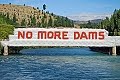
People who have lived near the inland Otago township, on the Clutha River/Mata-au, for 20 years or more will remember earlier sometimes divisive and frustrating conflicts over proposed big hydro-electric dams, which would have flooded the area.

One proposal, by the Electricity Corporation of New Zealand (ECNZ) in 1992, was to build a dam at Tuapeka Mouth that would have flooded 3000ha, including all of Beaumont. But among a series of more promising developments the long-delayed replacement work involving the nearby 19th century Beaumont Bridge is at last due to start next year.

This is one of the oldest bridges in the country still operating on a major state highway.

And more walkers and cyclists are already starting to move through the township since the 73km-long Clutha Gold Trail- which runs between Roxburgh and Lawrence, and includes Beaumont- was opened by Prime Minister John Key on October 24. Long-time resident, historian and writer Bill Dacker (61) is well aware of the area's previously somewhat mixed fortunes.

''It was a little backwater that we enjoyed as a backwater,'' he recalls.

But then a series of dam proposals came along and changed everything, he said.

Some locals, including some facing tough economic times, had agreed to sell their land.

Others, including the ''Hands Off Beaumont'' lobbyists, were determined to resist and to safeguard all they found precious in the area, including its rich history and its attractive and distinctive environment.
Mr Dacker highlights the significance of the bridge replacement work.

The current bridge had been around since 1887 and had struggled to cope with some of the ''huge trucks'' now passing through.

Mr Dacker, who is a long-standing member of the Clutha Gold Trail Trust Board, says the newly opened trail and other developments mean brighter times are coming for Beaumont, which will boost the local economy by bringing in more visitors and potential new residents. Strengthening Beaumont was also important strategically, because it gave the area a better chance of influencing its own destiny in future, he said.
''Unless we're going to make the place strong in a different way, other people are [still] going to see it as a backwater,'' he says.

Dave Crawford is an experienced jet boater and co-owner-operator of Beaumont Jet, with his wife Ali, And he is also a Gold Trail board member.

It was ''great'' to see the cyclists already starting to flow along the track, through Beaumont.
''It can only be good for this area,'' he says.

When he and his wife moved to Beaumont and began jet boat operations in 2004, he had long known the area had strong potential.

The nearby Clutha River/Mata-au is ''probably the best part of the Clutha River'', he adds.

These stretches of the river were also as good as ''anything in New Zealand'' and offered plenty of variety, including ''huge rapids'' and other ecologically appealing areas.

And he is not content with Beaumont being one of the region's and New Zealand's best-kept secrets.
''The more people the better.''

Mr Dacker, who these days divides his time between Beaumont and Port Chalmers, has lived in Beaumont for much of his life, having grown up there.

His father, Harry Dacker, had initially found work there as a rabbiter in the 1920s.

Bill Dacker said the idea of building a''cycle-cum-walking trail through the district, along the river and through the farmland to Lawrence, was a direct response - a way of creating economic opportunity by bringing people into this area as well as the other areas connected by the trail''.

The idea had come from the trust's Roxburgh-based chairman, Rod Peirce, who was a ''retired orchardist from Millers Flat with long-standing connections in Beaumont as well as to the other communities along the trail.''

The lessees of the Beaumont Hotel had also contributed to the upturn in Beaumont's fortunes by continuing to develop and support ''events tailored to hunters and fishermen while adding cyclists to those they wish to give hospitality to''.

And the pub also served ''the best blue cod meals this side of Iceland'', Mr Dacker said.

Widespread support from the Beaumont community for the trust, as well as backing from ''other communities connected by the trail'', had been key to the success of the trail development.

This sense of unity and support stood in ''stark contrast to divisions in the communities'' sparked by the ECNZ dam proposal in 1992, and was ''a wonderful thing to experience''.

Alison Mills, who leases the hotel with her husband, Gunni Egilsson, is also optimistic about the future, and says patrons with different interests and from range of backgrounds, including tourists, were using the hotel and nearby camping ground.

Mr Dacker noted there had been some ''recent controversy'' over suggestions of fees for using the trail.
He emphasised there was no official fee for using it, ''but the trust asks for a koha [donation], a contribution for its maintenance from its users as at the moment the trust is solely responsible for costs of its maintenance''.

Mr Peirce (76) said there were early signs that the new trail would prove positive, and help revive smaller communities such as Beaumont and Millers Flat.

''It's very satisfying. There's a general air of enthusiasm.''

Mr Peirce, who was also once chairman of the Friends of Beaumont group, had opposed various proposals to establish big new dams nearby.

And he is positive about the new trail's benefits.

''I thought, if there's any legacy I can leave, it may well be more like the trail, which is more positive, rather than being an activist against everything.

''I'd like to be seen as someone who left something for the benefit of the community.''

People were already starting to come from far afield to ride or walk the new trail, and local families were also enjoying it.

''We've had a tremendous amount of support from Contact Energy.''

And $3.8 million from the Government's New Zealand Cycle Trail project funding had been used to support the trail's development. Through the years Mr Peirce has noticed rural decline, including loss of population and services, in some of the smaller communities.

''It's very positive. I think that the smaller villages will definitely gain a tremendous amount over the next several years and into the future from the trail.''

And Beaumont was already looking up. The school had closed some decades ago, but ''rural visitors'' were increasing and the pub was humming - ''it's quite a busy little pub'', Mr Peirce said.

The gold trail was also good for Millers Flat - ''it's the only town that the trail actually goes right through the middle of.''

And Mr Dacker highlights Beaumont's distinctive geographical position, and its historical significance.

Beaumont is the first crossing place of the Clutha River/Mata-au when travelling on SH8 from Milton to Central Otago, and its many attractions. And the area was ''one of the major entrance and exit points'' for the Clutha Gold Trail walkway.

The Clutha River/Mata-au is one of the outstanding natural features of the newly opened trail, which follows the river ''on its journey across the river flats below Roxburgh, through the Beaumont Gorge, before it turns toward Lawrence at Beaumont'', Mr Dacker says. The river crosses the Beaumont Flat and then passes through the Rongahere Gorge, the ''last major river flat and gorge respectively of the schist peneplain or block mountain system of the Central Otago highlands''.

Beaumont was a true border between very different geographical zones.

''On the Rongahere side the climate is wetter and cooler, more like that of coastal Otago than Central Otago. On the Beaumont Gorge side the climate is hotter and drier, marking the beginning of Central Otago proper.''

The Maori name for the district is Te Kohai and here the ancestors of Kai Tahu Whanui also crossed the river, but on mokihi (traditional rafts), on their journeys into the interior.

There was also once a moa-hunting era village at Beaumont.

The town of Beaumont grew around the river crossing, where a ferry operated, accompanied by a supporting structure of hotels and shops. The natural vegetation of the nearby gorges reflected the ''borderland'' characteristics.

The dominant tree on Upper Birch Island - also known locally as Native Island - in the Beaumont Gorge is mountain beech, indicating the drier and hotter conditions there. The far larger Birch Island, or Moanui, in the Rongahere Gorge below Beaumont, and the bush of the gorge itself, has a covering of a mixed podocarp forest that includes sphagnum moss, mountain and silver beech as well as totara and matai.

''Both the gorge and the island are home to rare and nearly extinct insect species, protected on the island from rat predation by the swift waters of the river,'' Mr Dacker says.

''Beaumont's fortunes have fluctuated over the years according to major changes in the economic, gold-mining and agricultural history of the province.''

First the search for gold, then the arrival of the railways and the rise of horticulture on the river flats of Central Otago followed by the development of exotic forest plantations in the Blue Mountains all contributed to its growth.

But, subsequently, the closure of the railway branch line, the decline in gold extraction, the rise of large land holdings, changes in the horticultural sector, and finally the closure of the Beaumont Forest headquarters had also contributed to the community shrinking.

Closures of the railway, shops, the race track, churches and the school had all followed ''but always a significant minority clung on'' and many people, including some who had left, showed ''a remarkable dedication to the area'', Mr Dacker said.

And he emphasises that, for the first time in 40 years, there were ''signs of growth at Beaumont again''.
Margaret Healy, who helped organise a series of ''Back to Beaumont'' days, held over the years, has always been optimistic about the township's future.

''The aim is to get people and their families to come back to their grassroots, reminisce and enjoy Beaumont,'' she said.

It was a great place to raise a family and she was keen for Beaumont to become a ''thriving community'' again.


Beaumont
• Beaumont is a township on State Highway 87, at a crossing of the Clutha Mata-Au River, close to Central Otago, between Balclutha and Roxburgh, and is 6km southeast from Raes Junction.
• The township is one of the main entry and exit points on the 73km-long Clutha Gold Trail, between Lawrence and Roxburgh.
• The gold trail's development was backed by $3.8 million in New Zealand Cycle Trail project funding and was opened by Prime Minister John Key in October.
• The trail includes parts of an old Maori trail, sections of the former railway line route, and parts of a former road.
• An earlier proposal in 1992 by ECNZ was to build a dam at Tuapeka Mouth that would have flooded several thousand hectares, including all of Beaumont.

More...

Saturday, October 12, 2013

Otago Prepares To Open New Cycleways

Otago prepares to open new cycleways
Saturday 12 October 2013
3 News

Central Otago's semi-arid dry lands and the green farmlands of the Clutha District in the South Island are being opened up to cyclists and walkers.

The Roxburgh Gorge Trail and Clutha Gold Trail will be officially opened on October 24 by Finance Minister Bill English, the MP for Clutha-Southland, adding new cycling and walking options near the Otago Central Rail Trail, which already attracts an estimated 12,000 people a year.

The new trails have been developed by the Roxburgh Gorge Charitable Trust and Clutha Gold Charitable Trust over eight years.

The Roxburgh Gorge Trail runs 33km from Alexandra to Lake Roxburgh Dam in three stages - a 10km stretch from Alexandra to Doctors Point, a boat transfer to Shingle Creek and a 12km track to Lake Roxburgh Dam.

Rod Peirce, chair of the Clutha Gold Charitable Trust, said the trails had been the collective vision of so many for so long that opening day would mark the transition from a long-held dream to a reality.

Cyclists on the Roxburgh Gorge Trail are expected to take between three and six hours, depending on fitness levels, boat transfer connection times, and time taken to view landmarks. Walkers are expected to take eight to 10 hours, including the boat transfer.

The trail runs down the western side of the Clutha River and most of the route is close to the river. The Clutha Gold Trail is a one-to-two day easy 73km ride from Lake Roxburgh Village to Lawrence.

The first stage from Commissioner Flat to Beaumont mainly runs beside the Clutha River before heading along a defunct railway corridor from Beaumont to Lawrence.

Users are asked to pay $25 per person or $50 for a family, yearly, for a maintenance contribution tag which covers both trails. The charge will not be policed, the Otago Daily Times reports.

More...

Friday, September 13, 2013

Part Of Structure, Trust Chairman Says

Part of Structure, Trust Chairman says
Friday 13 September 2013
Otago Daily Times

Cycle trails are becoming increasingly common around the country and Central Otago is no exception. Inland Otago Conservation Awards winner Clutha Gold Trail Charitable Trust's chairman Rod Peirce talks about constructing the 73km-long trail from Roxburgh to Lawrence.  

What is it about the project you are involved in that got you interested in conservation and drives your work?
''It was probably providing easy access to the river bank for the public, and the historical aspect of the Clutha River like the dredging remnants. I have lived on the river since the 1960s. We used to find old dredge buckets and observe the wrecks of the dredge so I have become, in my mid-70s, part of the structure of the river. It's been a lifetime of a developing interest that has come to a peak with this project.''

How does the project you're involved in benefit conservation?
''There's quite a lot of flora down there that we are still discovering as trustees. Things keep popping up all the time. For example, across the river, on the opposite side to the trail, we discovered 600-year-old native totara trees. The lower Clutha, from Roxburgh through to Beaumont was very rich with history - gold-mining history and Maori history. It's a learning curve for us, all the time history is being uncovered.''

What do you get out of your work in conservation?
''There's the enjoyment of dealing with a range of people - corporate people, archaeologists and contractors. But the core thing for me - I have always been a tramper, climber and skier - is that I have got older and found that cycling really fits the bill for older people. There has been a lot of physical work to be done in the construction of the trail and riding it to test it out, so healthwise it's great. It lengthens my life.''

What challenges have you faced and how have they been overcome?
''It's been a huge challenge for the whole trust really because we are a group of volunteers who have come together with an idea and are now making it a reality. Negotiating with landowners [to gain easements] was a challenge. In a lot of cases we ended up working through a process and resolved most issues. I think in many cases the landowners were a bit apprehensive. We were taken to the Environment Court but that was resolved too.''

In what direction do yousee your conservation work going in the future?
''One of the trust's key functions is to maintain the trail and maintain the quality. It is very important for us to have a continued sound relationship with our easement providers and trail neighbours and that's a commitment we gladly take. We are also prepared to support other groups with similar projects. What happens in the future, though, is hard to be exact about.''

More...

Wednesday, December 5, 2012

Cycle Trail Work Progresses Steadily

Cycle trail work progresses steadily
By Sarah Marquet, on Wednesday 5 December 2012
Otago Daily Times

Construction of two cycle trails between Alexandra and Lawrence is progressing steadily, with more money uplifted from funders and hopes to have some sections open to the public early next year.

With a budget of $3.4 million, $2 million of which came from the Government, construction of the 34km Roxburgh Gorge Cycle Trail between Alexandra and the Roxburgh dam started just over a year ago.

Recently, with government funds running low, Central Lakes Trust and the Otago Community Trust granted a total of $670,000.

Trail trust chairman Stephen Jeffery said that was not because there was a time limit on the government funds, but because they decided to use that money before approaching other funders.

The project was also costing more than expected.

He said contractors were within their tender budgets but the entire project was not running to budget because of costly realignment issues at the Alexandra end of the trail. The contractor was due back there in about a week and it was hoped that section, about 10km, would be complete by April.

A 12km section at the Roxburgh end was almost finished. Only grading, gravelling and signage had to be completed before it could be open to locals, although that was not expected to happen until early next year, he said.

Once the trails were complete, jetties would be built in the Roxburgh Gorge so cyclists and walkers could catch a boat between the two sections of the trail, as the trust still did not have permission from the Miller family to build the centre section. Construction of the 73km Clutha Gold Cycle Trail from the Roxburgh dam to Lawrence, on the opposite side of the river to the Roxburgh Gorge trail, began at the start of this year.

Trail trust chairman Rod Peirce said most of the trail was under construction and was within the $5.5 million budget, $3.8 million of which came from the Government.

The 13km section from the dam to Pinders Pond was complete except for a bridge over the Teviot River, and it was hoped that could open in the new year.

Construction from the Lawrence end was now about 2km short of Beaumont and construction on another section, from Millers Flat to the Talleburn River, was due to start soon.

Both chairmen said they had hoped the trails would be further along by now.

Mr Jeffery said there were ''things thrown at us that slowed us down ... things beyond our control''.

Mr Peirce said the Clutha Gold trail was also held up by small things but he was ''extremely pleased'' with how it was looking.

It was hoped the trail would be completed and open by next April, although ''with an [almost] 80km-long trail, it's hard to be definitive''.

Mr Jeffery said the Roxburgh Gorge trail trust would be ''trying to hurry things along'' now.

The trails are two of the 18 ''Great Rides'' in the Government's New Zealand Cycle Trail project.

More...

Thursday, July 19, 2012

Another Section Of Clutha Gold Trail

Another section of Clutha Gold trail takes shape
By Helena de Reus, on Thursday 19 July 2012
Otago Daily Times

Work has begun on the Beaumont to Lawrence section of the Clutha Gold Trail.

Trail charitable trust chairman Rod Peirce said SouthRoads staff started building the 15km section from Beaumont to Evans Flat on Monday, while other contractors worked to install bridges between Evans Flat and Lawrence.

Construction of the cycle trail at Beaumont began at the SH8 Clutha River bridge, across the road from the Beaumont Millennium Track.

Mr Peirce said contractors began scraping off topsoil, laying base gravel and putting culverts in place.

"From the bridge to Weardale St we're utilising the road reserve, and then carrying on through the [Beaumont] township, with most of this trail section on private property."

The 73km trail, which will cost an estimated $5.5 million, was the first in Central Otago to receive funding under the New Zealand Cycle Trail project, getting $3.8 million from the Government. A 20km section is planned in the Clutha district, between Beaumont and Lawrence; the remaining 53km will be in Central Otago, from Lake Roxburgh to Beaumont.

The trail section near the Roxburgh Bridge is nearing completion.

Mr Peirce said the 8km section from Evans Flat to Lawrence followed the old railway line from Lawrence to Milton, and track construction was almost complete.

Fencing in this area was done by Lawrence-Tuapeka area residents as a fundraiser for the Tuapeka Aquatic Centre - a project which Mr Peirce said the trust was happy to support.

The Clutha District Council is running workshops designed to help facilitate ideas and identify opportunities for the community arising from the Clutha Gold Trail.

The first workshop was held in November last year, with the fourth due to be held in Lawrence on July 31.

More...

Monday, July 2, 2012

Contact Set To Sell Clutha Properties

Contact set to sell Clutha properties
By Mark Price, on Monday 2 July 2012
Otago Daily Times

One of the biggest private owners of land and assets along the Clutha River, Contact Energy, has begun disposing of land it no longer requires.

Contact announced in May it had "withdrawn plans" for further hydro development on the Clutha River and said it would review management and ownership of some of its land holdings near the river.

Spokeswoman Janet Carson said at the weekend the company had identified "some properties" in the lower Clutha it was considering for sale, and was reviewing its upper Clutha holdings.

"We are working with current lessees to establish their interest in the first instance. Properties for potential sale will be considered on a case-by-case basis."It is understood some lease-holders were sent letters about the sale process in December.

Affected lease-holders contacted yesterday did not want to comment.

While it is not clear which of its properties Contact is looking to sell, the ODT has obtained information from a property sales database which shows clearly for the first time the extent of the Wellington-based energy company's total Otago property holdings.

Although the nature of holdings is not identified specifically in the database, they do include land bought for hydro development.

The database shows Contact has 147 individual properties in Otago, covering 13,912.25ha, and valued at $700,860,500. Included are $432,450,000 for the Clyde Dam and $200,000,000 for the Lake Roxburgh village.

The dams aside, the capital value of Contact's Otago properties is $68,410,500. The property is almost entirely between Luggate and Beaumont, with a small amount in Dunedin.

Contact has previously declined to comment on the size or value of its Clutha portfolio but has stated it inherited the land from the Government-owned Electricity Corporation of New Zealand, which was split up in 1996.

Although figures from the database do not show what improvements have been made to the land, most values now are considerably higher than the "gross purchase prices" listed:A 1.8ha property at Luggate bought in 1982 for $30,246 is now valued at $365,000.

A 88.83ha property at Mt Pisa bought in 1989 for $871,875 is now valued at $1,183,000.

A 5.6ha property bought at Wye Creek, Queenstown Lakes, for $8500 in 1985 is now valued at $1,025,000.

However, some appear to have declined over time.

A 1.32ha property at Beaumont was bought in 1993 for $195,000 and is now valued at $62,500.

A 191.16ha property at Ettrick was bought in 1995 for $885,000 and is now valued at $620,000.

A property of 0.13ha bought at Springvale in 1989 for $86,000 is now valued at $15,000.

Co-ordinator of the Clutha River Forum Lewis Verduyn reiterated at the weekend his call for an "ethical repatriation of lands".

He said much of the land had been "seized" in the 1980s with some land owners "literally made tenants on their own land".

--------------------------------------------------------------------------------

Contact's 157 Otago properties, classified by the ODT according to approximate location, include:

Luggate Properties: 10; area: 191.49ha; capital value*: $5,558,000
Hawea Flat Properties: 2; area: 33.09ha; value: $290,000
Mount Pisa Properties: 6; area: 454.95ha; value: $11,483,000
Queensberry Properties: 2; area: 2.83ha; value: $480,000
LowburnProperties: 14; area: 5950.74ha; value $5,948,000Cromwell Properties: 2; area: 9.59ha; value: $1,855,000
Queenstown Lakes Properties: 5; area: 87.32ha; value: $3,038,500
Kawarau Gorge Properties: 2; area: 204.27ha; value: $2,300,000
Other Central Otago Properties: 9; area: 2308.76ha; value: $2,603,500
Clyde Properties: 2; area: 122.86ha; value: $432,990,000
Galloway Properties: 1; area: 15.66ha; value $110,000
Lake Roxburgh Village Properties: 1; area 63.5ha; value: $200,000,000
Teviot Properties: 1; area: 2.22ha; value: $225,000
Letts Gully, Central Otago Properties: 3; area: 8.33ha; value: $312,000
Springvale Properties: 2; area: 4.61ha; value: $245,000
Ettrick Properties 10; area: 786.21ha; value: $2,928,000
Millers Flat Properties: 30; area: 186.12ha; value: $4,250,000
Craigellachie Properties: 6; area: 1656.78ha; value: $6,442,000
Beaumont Properties: 19; area: 315.56ha; value: $4,160,000
Kononi Properties: 1; area: 70.13ha; value: $85,000
Evans Flat Properties: 4; area: 3.72ha; value: $108,500
Island Block Properties: 7; area: 489.21ha; value: $3,102,000
Raes Junction Properties: 1; area: 55.64ha; value $705,000
Rongahere Properties: 4; area: 884.22ha; value: $11,525,000
*values as per current GVs

More...

Thursday, June 28, 2012

Trust Gives Cycleway Grant Of $300,000

Trust gives cycleway grant of $300,000
By Helena de Reus, on Thursday 28 June 2012
Otago Daily Times

The Clutha Gold Trail has received a $300,000 boost for the Beaumont to Lawrence leg of the cycleway.

The Otago Community Trust yesterday announced the large donation, which has been welcomed by the trust behind the trail.

The 73km trail, which will cost an estimated $5.5 million, was the first in Central Otago to receive funding under the New Zealand Cycle Trail project, with $3.8 million from the Government.

A 20km section is planned in the Clutha district, between Beaumont and Lawrence, and the remaining 53km will be in Central Otago, from Lake Roxburgh to Beaumont.

Otago Community Trust chief executive Keith Ellwood said the trust was very supportive of the cycleway development in the region, which would benefit the community in terms of economic development, health, recreation and exercise.

Clutha Gold Trail Charitable Trust chairman Rod Peirce said trustees were "pleased and very excited" with the donation.

"We have our Government funding but we needed our co-funding. The full amount we requested from the Otago Community Trust was granted, which is just what we needed."

Mr Peirce said work on the trail was well under way.

"In construction terms we're more than halfway through."

The trail is being constructed in six sections.

Stage one from Roxburgh dam to Roxburgh was almost finished, but awaiting the construction of two bridges.

Further downstream, the 8km stretch near Lawrence was being worked on by Homer Contracting.

Mr Peirce said the 8km section followed the old railway line from Lawrence to Milton so track construction was almost complete.

Bridges in the Lawrence-Tuapeka area of the trail were due to be installed soon.

The trust hopes to have the Clutha Gold Trail completed by the end of the year.

More...

Friday, June 22, 2012

Trust Hopes Trail Open By End Of Year

Trust hopes cycle trail completed by end of year
By Helena de Reus, on Friday 22 June 2012
Otago Daily Times

Work on the Clutha district leg of the Clutha Gold Trail will start next week, with the trust behind the cycle trail hopeful the whole trail will be completed by the end of the year.

Clutha Gold Charitable Trust chairman Rod Peirce said contractors would start work at Beaumont, finishing at Cockleshell Rd in the Evans Flat area near Lawrence.

SouthRoads won the contract for that section of the trail, with Waitahuna-based Homer Contracting due to work on the Evans Flat to Lawrence section later in the year.

Trail project manager Tim Dennis, of Southern Land CKL, said SouthRoads staff were due to begin construction of the trail next week on the 15km section from Beaumont to Evans Flat.

The 73km trail, which will cost an estimated $5.5 million, was the first in Central Otago to receive funding under the New Zealand Cycle Trail project, with $3.8 million from the Government.

A 20km section is planned in the Clutha district, between Beaumont and Lawrence, and the remaining 53km will be in Central Otago, from Lake Roxburgh to Beaumont.

The trail is being constructed in six sections.

Stage one from Roxburgh Dam to Roxburgh was "virtually concluded", but awaiting the construction of two bridges.

Mr Peirce said workers had reached Millers Flat, with work on the next stage between Millers Flat and the Millennium Track in the Beaumont Gorge due to begin in a few weeks.

"Progress is going quite well. We'd like to think it would be finished by the end of the year, or at least the beginning of next year. Either way, some of the trail should be open for the summer."

The trust had hoped to begin work on the trail last year, but was unable to do so as contractors were not available any earlier.

The Clutha District Council is running workshops designed to help facilitate ideas and identify opportunities for the community arising from the Clutha Gold Trail.

The first workshop was held in November last year, with the third held on Tuesday night.

Council development manager Jill Borland said the council wanted a forum to help create ideas and identify opportunities for the local community arising from the Clutha Gold Trail.

The public "Trail Opportunities Forum" aimed to identify those with an interest in the trail development and establish a mode of communication.

She hoped it would also identify community resources, skills and interests to maximise potential trail-related opportunities.

Two more workshops have been planned for July 31, and August 14.

More...

Saturday, May 5, 2012

Bridges' Future Unaffected

Bridges' future unaffected
By Helena de Reus, on Friday 4 May 2012
Otago Daily Times

Contact Energy's recent announcement it is shelving plans for further development on the Clutha River will not affect the future of two Clutha bridges.

The 124-year-old bridge at Beaumont and the Clydevale Bridge, both one-lane bridges which span the Clutha River, are scheduled for replacement or upgrading.

Earlier this week, Contact Energy announced it had withdrawn plans for further hydro development on the Clutha River and it would review management and ownership of its land holdings near the river.

A search of property records by Clutha District Council staff showed Contact Energy held 37 properties in the Clutha district totalling 2989ha and with a capital value of $26.3 million (figures from 2008). It is unclear how much of this property was earmarked for use in potential dam projects at Beaumont and Tuapeka Mouth.

New Zealand Transport Agency acting Otago-Southland state highways manager Ian Duncan said Contact Energy's recent announcement it was shelving plans for the Clutha River would not make the replacement bridge at Beaumont a higher priority.

Mr Duncan said the agency was still looking at building a new bridge at Beaumont in the 2017-18 financial year. Investigation work was scheduled to begin by 2014.

The Beaumont Bridge is funded solely by the NZTA.

Clutha District Council district assets manager Jules Witt said the Clydevale Bridge already had "reasonably high priority" with the Otago Regional Transport Committee and he did not believe the bridge would have been affected even if Contact Energy's developments had gone ahead.

Last year the Clutha District Council decided to upgrade the Clydevale Bridge to class 1 load capacity. Strengthening the bridge to class 1 would cost about $974,000. The council's share was estimated to be $390,000. NZTA would foot the remainder of the bill. The decision whether to build a new bridge would be reconsidered in 20 years.

Mr Witt said the council had budgeted for the strengthening and repairs in the 2012-13 financial year.

More...

Wednesday, May 2, 2012

Windfall For Contact Shareholders

Windfall for Contact shareholders expected
Tuesday 1 May 2012
TVNZ ONE News

Contact Energy shareholders can expect a substantial boost to cash flow from 2014 onwards as the company completes geothermal projects, winds back major capital spending and seeks to sell some of its $100 million of development land holdings.

The company's decision to all but abandon long-held hydro-electricity developments on the Clutha River was part of a wider drive to strip capital project costs out of the business for the time being, said chief executive Dennis Barnes.

Contact cited weak national electricity demand, the challenge of gaining resource consents and better options elsewhere for putting on ice hydro-electricity projects that could potentially double its output from the Clutha River, and beginning a process of selling land holdings in the area.

The Clutha options were not commercially viable "in the foreseeable future".

Contact already has 752 MW of installed capacity at the Clyde and Roxburgh hydro stations on the Clutha, and inherited options for developments at Tuapeka Mouth, Beaumont, Queensberry, and Luggate totalling 763MW when it was corporatised in the mid-1990's.

Since then, the company has periodically examined its Clutha options, while fending off criticism from local communities that a lack of clarity about its plans was impeding economic development.

A review of calculations last made in 2008 had shown roading infrastructure costs would be far higher than originally estimated, while the size of each project was too large to consider building for the foreseeable future.

Asked whether the decision signalled the end of "big hydro" in New Zealand, Barnes said: "I don't believe so, but I can't answer the question for 15 to 20 years."

It would be 2025 "at the earliest" before any of the Clutha options made sense to re-examine.

"We will stop spending money on it," he said. "Project development pipelines need to show a return and we needed to take the community to an honest point.

We decided we wouldn't do any work for seven, eight or 10 years, and it was fair to tell them that."

Contact also had more attractive geothermal and wind development options than any of its large hydro prospects, although it has extended for one year its resource consents on a small hydro scheme attached to the control gates on Lake Hawea, the only controlled storage lake on the Clutha system.

Barnes said one of his chief tasks in the last year had been to strip out capital development costs from the business, and to start implementing a more active land management policy to rationalise the company's approximately $100 million portfolio of development and other land holdings around the country.

The Clutha decision is still a step away from complete abandonment, with Contact proposing in some cases to sell land with encumbrances either to allow a future hydro development or preventing sale to a competing hydro developer.

"A dammed river is a very significant energy resource and will have a value over a timeframe," he said.

The company is taking a similar approach to land purchased for its mega-wind farm development in the North Island, on the coast north of Raglan, selling property with a future development right attached.

Contact owned only about 20% of the land it required to build any of the proposed Clutha dams.

No decision had yet been made on exactly how much of its land holdings would be marked for disposal, Barnes said.

He conceded also that resource consents in the lower South Island were likely to take longer and be more costly to obtain than in some other parts of the country.

"Our view is that if you take your time and are transparent, they are consent-able," he said. "But in that part of the country, the community conversations take longer and cost more. It's different from Wairakei, where the community embraces geothermal development."

Barnes said that once the 166MW Te Mihi geothermal plant was completed in 2013 that would bring to an end four years in which Contact had committed an average of $500 million of capital annually.

"It will drop to $100 million or less. The balance goes to cash flow. You will see that very strongly in 2014."

Contact shares traded unchanged at $4.85 on the NZX and have declined about 8% this year.

More...

Contact Should Atone: Resident

Contact should atone: resident
By Lynda van Kempen, on Wednesday 2 May 2012
Otago Daily Times

Beaumont resident Margaret Healy says she can finally "chuck away the snorkel" after living for years with the threat of the area being flooded if a hydro dam was built on the Clutha River nearby.

Contact Energy announced on Monday it was dropping its plans for further hydro development on the river, saying none of the options for dams at Beaumont, Tuapeka, Luggate and Queensberry were viable "in the foreseeable future".

Beaumont residents and former residents who opposed further hydro development on the Clutha welcomed the decision as "long-awaited and absolutely marvellous", said Mrs Healy, who is the secretary-treasurer of the Beaumont Residents Group.

It had been daunting to live for the past 20 years with the prospect of a dam that might flood the area "hanging over" them.

Contact owed Beaumont some compensation for the impact that uncertainty had had on the community, she said.

"The threat of the dam has changed the whole area and influenced a lot of things over the years, including the population in the area. The local shop closed as well as the school, and people stopped buying land here and took out orchards. We feel Contact owes us some compensation to make up for all that."

Compensation could take the form of the community being "gifted" the former shop building, which was owned by Contact, or the company could contribute to a new roof for the Beaumont Hall, Mrs Healy said.

Asked whether Contact would offer any "compensation" to Beaumont, Contact group communications manager Janet Carson said: "We're part of this community and contribute where we can.

"We have been working with locals about the shop for some time and will continue to see what's possible.

"We have also, just today, received a request for assistance with other [Beaumont] community-related matters, which we are also considering," she said.

Contact was involved in community projects throughout the region but the contributions it made should not be viewed as "compensation", she said.

Mrs Healy said Beaumont was a special place and she had received a steady stream of emails and phone calls yesterday from people saying they were "delighted" at the cancellation of the dam plans.

"Lots of them were people who used to live here.

"One even said, 'Hooray, I can still be buried in the Beaumont cemetery when I die'."

Under the proposal for a dam at Tuapeka Mouth, the cemetery would have been flooded, along with the Beaumont township.

Mrs Healy and her husband have lived on a 0.4ha block of land near the Beaumont bridge for the past 35 years.

Plans for a Tuapeka dam were first mooted in 1965 by Contact's predecessor, the Electricity Corporation of New Zealand, and the project has been reconsidered several times since then.

"It appears that threat of a dam has been virtually removed now that Contact is concentrating on other energy projects like geothermal projects," Mrs Healy said.

"We used to joke we'd be well under the water here and we'd need a 30m snorkel ... well, now I can chuck away the snorkel."

There would be nothing holding back progress in the area now that uncertainty was gone, she said.

People would be able to plan for the future and buy and sell land freely.

More...

Decision On Dams No Surprise

Decision on dams no surprise
By Lucy Ibbotson, on Wednesday 2 May 2012
Otago Daily Times

Contact Energy's decision to drop its hydro development plans for the Clutha River has come as no surprise to local government leaders in the district.

Clutha Mayor Bryan Cadogan had been "semi-aware" of Contact's intentions for some time.

He said the prospect of dams on the Clutha River had "polarised the community", and it was good to have some closure on a long period of uncertainty.

"I suppose if nothing else it gives certainty now for the future because for so long we've been saying 'Imagine if the dam happened' ... It's better to be dealing with the facts and move on with reality ... so onwards and upwards."

Mr Cadogan said there would never have been a "ready acceptance" of hydro development from the community if the project had proceeded.

"To have development in the district is something that we're always looking for, but it's got to be the right development and it's got to have community support."

The news Contact had cancelled its dam plans was not unexpected for Central Otago Mayor Tony Lepper, either.

"Only because I thought they were expensive power projects to go through with and obviously they've come to the same conclusion," he said.

"It's probably disappointing to miss out on the economic benefits, but I'm sure there's other economic benefits to come out of that river and we'll just have to make the most of those."

Mr Lepper said on a personal level, he was "rapt" there would be no dam proceeding at Luggate, where he regularly kayaked.

"I think that's one of the nicest stretches of river in New Zealand and I play on it all the time.

"I'm very pleased that it's going to be around for a bit longer."

Queenstown Lakes deputy mayor Lyal Cocks said the decision was "appropriate", based on information Contact had provided throughout the process and the division the dam proposals had caused within the district's communities.

"It's been an issue that we've been on the edge of for a while watching the progress ... I think it's an appropriate decision looking at the way the numbers stack up as they've [Contact] indicated to us."

He said there were other options for power generation that were more feasible

More...

Contact Ditches Clutha Hydro Plans

Contact ditches Clutha hydro plans
By Che Baker, Tuesday 1 May 2012
Southland Times

Contact Energy has announced it will no longer proceed with developing hydro generation on the Clutha River.

Contact chief executive officer Dennis Barnes said investigations during the past three years at four different sites along the river, at Queensberry, Luggate, Tuapeka Mouth and Beaumont, have shown none of the options was viable.

"It has become clear that all future Clutha hydro options came in at a much higher cost per megawatt to build than the next available new geothermal and wind generation options,'' Mr Barnes said.

The decision to stop development of the hydro options was based on an assessment of the economics of each option and took into account a range of technical, environmental, social and cultural factors, he said.

As part of Contact's land management strategy, it will be reviewing its land holdings near the Clutha River.

More...

Tuesday, May 1, 2012

Contact Pulls Plug On Dams

Contact pulls plug on dams
By Lucy Ibbotson, on Tuesday 1 May 2012
Otago Daily Times

Contact Energy has withdrawn plans for further hydro development on the Clutha River and will review management and ownership of its land holdings near the river.

The decision, announced yesterday, comes after Contact signalled in February delays in its plans to develop a new hydro-generation facility on the Clutha River, saying the project was on the "back burner" and geothermal energy remained a priority.

Contact spokeswoman Janet Carson said at the time the four Clutha hydro-development options, at Tuapeka Mouth, Beaumont, Queensberry and Luggate, "remained open", but were "more likely to be further down the track, probably into the next decade".

Contact announced in 2008 it was revisiting plans for dams on the upper and lower Clutha, costing between $300 million and $1.5 billion, which were originally proposed more than 20 years ago by its predecessor, the Electricity Corporation of New Zealand.

Contact hydro projects manager Neil Gillespie confirmed last night he had notified "as many of the stakeholders and people that we've talked to over the last three years" of the formal decision to end the Clutha hydro-development project.

"Contact has decided not to proceed with any of the options being investigated for hydro-generation development on the Clutha at this time and has ceased all work pertaining to it," Mr Gillespie's email yesterday to affected parties said.

However, he told the Otago Daily Times last night he could not permanently rule out hydro development on the river, as "who knows what the future holds".

Contact will now review future management and ownership of all its land holdings near the Clutha River as part of its ongoing land management strategy.

Mr Gillespie was unable to provide details on the extent of that land, but confirmed selling it was "one of the options that could come out of [the review]".

In a media statement, Contact chief executive Dennis Barnes said the company's investigations during the past three years had shown none of the options considered were viable for development.

"It has become clear that all future Clutha hydro options came in at a much higher cost per megawatt to build than the next available new geothermal and wind-generation options. On current demand forecasts, the Clutha options are not economic in the foreseeable future," Mr Barnes said.

"Contact has a range of new generation in the pipeline, either confirmed, consented or under construction, to meet foreseeable electricity demand for our customers."

Clutha River Forum, an alliance of river and conservation groups opposed to "think-big" hydro development on the Clutha, was set up in 2009. Forum co-ordinator Lewis Verduyn, of Wanaka, said yesterday's announcement was not a surprise.

"For some time now, we have known that New Zealand energy companies have been experiencing a low-growth environment in the wake of the global financial crisis," Mr Verduyn said.

"Consumers are cutting back, capital costs remain high, lake storage levels remain erratic, and there is now sufficient new generation either coming online or consented for some years ahead.

This decision, then, must be welcomed as a sensible one for Contact shareholders and river communities alike.

"What we need most now are energy-smart technologies, since efficiency is less than half the cost of new generation. It would be reasonable to say that unless we return to pre-2008 economic growth, which isn't going to happen, that the era of large dams is over."

Mr Gillespie declined to comment about how much Contact had spent developing the Clutha project, as it was "commercially sensitive".

More...

Thursday, April 12, 2012

Progress On Clutha Gold Trail

Considerable progress on Clutha Gold cycle trail
By Sarah Marquet, on Thursday 12 April 2012
Otago Daily Times

It's full steam ahead for the 73km Clutha Gold cycle trail between the Roxburgh dam and Lawrence. Construction is well under way on two sections at the Roxburgh end, and is about to start on another at the Lawrence end.

Trail trust chairman Rod Peirce said successful tenderer Homer Contracting was due to start on the Lawrence to Cockleshell Rd section, which would be relatively easy as it was on an old railway line.

"It's more like a tidy-up and spread some top gravel ...There are a couple of bridges to go in but they are under construction."

Earlier this year, construction began on other sections: 9km from the Roxburgh dam to Roxburgh, and a 23km section from Roxburgh to the mouth of the Beaumont Gorge at Minzion Burn. While Mr Peirce estimated between only 2km and 4km had been completed, he said the rest was not far away, some sections needing only a final top-dressing of gravel.

"It takes a while to do each section ... [We] need a heavy rain to be part of the process." Heavy rain would show weaknesses in the land, and any slips or potential slips could be fixed.

Two bridges are also to be installed in these sections: one at Butchers Creek in Roxburgh East and another over the Teviot River.

Mr Peirce described the trail section which passed Pinders Pond as a "trial" section where the contractor was fine-tuning construction methods. That section would be open to the public on Sunday from 2pm to 4pm to give people an idea of what the final product would be.

Although people are asked to leave their bikes at home because of the number of people expected, people would be able to walk 1km either way from the Pinders Pond campground and car park area.

Mr Peirce said trust members would be on hand to guide visitors and talk about the trail.

He said "a lot of people had been going to Pinders Pond to inspect the trail at weekends and the community was "beginning to take ownership" of the trail, and the trust was hearing "so many good comments" which had helped spark the plan for the open day.

However, Mr Peirce warned the trail was still a construction site and, as such, was effectively closed to the public, except for the open day. He warned contractors were still working on the trail during the week.

In its entirety, the trail will cross 11 private sections for which land-use easements have been obtained, Central Otago and Clutha District Council road verge, New Zealand Transport Agency road verge, Contact Energy, Land Information New Zealand and marginal strip land.

Mr Peirce said the completed trail between Roxburgh dam and Lawrence was scheduled to be opened early next year. It is part of the Nga Haerenga, New Zealand Cycle Trail network, will cost $5.5 million to build, $3.8 million of which will come from government.

It follows the true left of the Clutha River to Beaumont, then winds through rural valleys to Lawrence.

It is intended the trail will link up with the 34km Roxburgh Gorge cycle trail between the Roxburgh dam and Alexandra.

Construction at the Alexandra end of the gorge trail has slowed since the trail trust began renegotiations with Bruce and Leigh Johnston, landowners on the section, after the couple voiced safety concerns which effectively stalled construction around their land.

Trail trust chairman Stephen Jeffery said the delay brought a silver lining: it meant the contractor building the trail could begin work near the Roxburgh dam, speeding up progress at that end.

However, the Alexandra delay had pushed the trail timeframe back "a bit" and instead of the 10km Roxburgh Gorge section being completed by June as scheduled, it would now be "well into spring" before it was finished.

Work began on that section in November.

Mr Jeffery estimated a little more than 4km of the trail had been completed so far. The middle section was still a "work in progress".

More...

Thursday, February 23, 2012

Clutha Hydro Plans Stalled

Clutha hydro plans stalled
By Lynda Van Kempen, on Thursday 23 February 2012
Otago Daily Times

Contact Energy has signalled delays in its plans for further hydro development on the Clutha River, saying the project is on the "back burner" and other developments have greater priority.

In 2009, Contact announced it was revisiting plans for dams on the upper and lower Clutha, at Tuapeka Mouth, Queensberry, Luggate and Beaumont, costing between $300 million and $1.5 billion. The schemes had been proposed by Contact's predecessor, the Electricity Corporation of New Zealand, more than 20 years ago.

Contact chief executive Dennis Barnes was reported this week as saying the Clutha hydro project was on the "back burner". He was unavailable for comment yesterday, but Contact spokeswoman Janet Carson said geothermal energy remained the priority development area for Contact.

However, it continued to investigate wind, hydro and gas-fired developments. Contact was still assessing the four Clutha hydro development options and they "remained open".

"Our conversations, data assessments and research undertaken to date are showing that pursuing further hydro development is more likely to be further down the track, probably into the next decade, and we are considering the implications of that."

She declined to elaborate.

The Clutha hydro project was on the "back burner", as opposed to "priority developments" under construction such as the Te Mihi power station, near the Wairakei geothermal power station, northwest of Taupo, Ms Carson said.

There had been no "change of priority" by the company towards hydro development. She declined to comment on how much Contact had spent so far developing the Clutha project.

The Clutha River Forum, an alliance of river and conservation groups opposed to "think-big" hydro development on the Clutha, was set up in 2009. It launched a "Option 5 - no more dams" campaign.

Asked for comment about delays to the hydro project, forum co-ordinator Lewis Verduyn, of Wanaka, said the world was changing rapidly "and these former business-as-usual projects are simply not realistic".

"We've always considered further `think-big' dams on the Clutha to be inappropriate, outdated and uneconomic. Now, Contact is facing a landslide of economic and environmental issues that were largely unforeseen just a few years ago.

"With electricity demand falling, the high cost of servicing capital and record low flows in the Clutha River, it's difficult to imagine how these plans could ever be viable in the future," he said.

Contact's stance on the project comes in the wake of the decision last month by Meridian Energy to shelve its plans for a $2 billion wind farm on the Lammermoor Range. Meridian chief executive Mark Binns said shelving the Project Hayes wind farm was "a prudent commercial decision", as the company had other higher-priority projects.

Asked at that time if the decision had any impact on the Clutha hydro plans, Contact hydro projects manager Neil Gillespie said the hydro plans were at a different stage from those of Meridian's Project Hayes.

It had a consented project, while Contact had yet to narrow down the options and was "quite some time away" from thinking about resource consents.

More...

Tuesday, January 24, 2012

Contact Undeterred By Hayes Decision

Power companies undeterred by Project Hayes decision
By Lynda Van Kempen, on Tuesday 24 January 2012
Otago Daily Times

In the wake of the Project Hayes decision, it is business as usual for Contact Energy, weighing up options for hydro development on the Clutha River, and Pioneer Generation, looking at small-scale wind farms.

Meridian's decision to shelve its planned $2 billion wind farm on the Lammermoor Range in the Central Otago has had little impact at this stage on Contact and Pioneer's plans.

Contact Clutha hydro project manager Neil Gillespie said the hydro plans were "at a completely different stage to what Meridian was at when it pulled the plug.

They had a consented project.

"We have yet to narrow down the options and decide on a favoured option and we're quite some time away from even having to think about resource consents," Mr Gillespie said.

Contact has been investigating four main hydro options on the upper and lower Clutha, proposing dams at Tuapeka Mouth, Queensberry, Luggate and Beaumont costing between $300 million and $1.5 billion.

The schemes were mooted more than 20 years ago and originated from proposals by Contact's predecessor, the Electricity Corporation of New Zealand.

Ultimately, the Project Hayes decision would have an impact "when we're looking at starting to build, but we're nowhere near that stage", he said.

In the meantime, the company was consulting the community, and analysing options.

The community's views, technical and engineering studies and the effect on the environment were all factors which would be taken into consideration, Mr Gillespie said.

"Nothing's changed for us in what we're doing because of Meridian's decision."

Pioneer Generation chief executive Fraser Jonker said its plans for wind farms were on a vastly smaller scale than Meridian's.

The Environment Court decision in 2009, which cancelled resource consents for Project Hayes, saying the wind farm was inappropriate in an outstanding natural landscape, had influenced the type of wind farm proposals Pioneer had been investigating.

"We would never attempt to place a wind farm in that type of a landscape because it would be too much of hurdle to get it consented. "The projects we have under more investigation at the moment have taken that sort of landscape into consideration," Mr Jonker said.

Pioneer was still talking to several Otago and Southland farmers about the possibility of constructing small-scale wind farms on rural properties, along similar lines to its nine-turbine Mt Stuart wind farm in South Otago.

More...

Friday, January 6, 2012

Contact Vies For More Time

Contact vies for more time to establish hydro scheme
By Lucy Ibbotson, on Friday 6 January 2012
Otago Daily Times

Contact Energy has asked for more time to establish a hydroelectric scheme at Lake Hawea, citing the global economic downturn and seasonal construction constraints as reasons for the delay in exercising the project's original consent.

Contact has proposed the construction and operation of a small-scale hydro-generation facility in the outfall control structure of the existing Lake Hawea dam.

It secured an original land use consent from the Queenstown Lakes District Council in 2007 for the 17.2MW Hawea Gates Generation Project, due to lapse on February 7.

Contact also holds associated consents granted by the Otago Regional Council with expiry periods of 10 and 15 years, lapsing on various dates in 2017 and 2022. It wants to extend the expiry date of the QLDC consent another five years, to July 16, 2017, to coincide with the regional council consents.

Contact hydro-development project manager Neil Gillespie said, while Contact was "continuing to progress, giving effect to the consent", it was not possible to complete the final design and construction of the project within the current QLDC consent period.

The extension application said a combination of "technical, practical and economic constraints" were behind the delay.

The project was not straightforward as it involved "retrofitting a modern tailor-made generation plant to existing infrastructure", making the economic risks of project high, the application stated.

A final investment decision could not be made by the current lapse date, a situation "exacerbated by the global economic downturn and associated slower-than-anticipated growth in electricity demand since 2008".

Also, because initial construction work had to be performed "in-river", the project was limited by the ORC consents and seasonal constraints, which had contributed to its extended duration.

The project requires modifying the Hawea dam structure, on Contact-owned land, by constructing twin powerhouses; installing a generation plant; altering the intake structure; installing penstocks through the existing sluices; strengthening some existing works; and carrying out earthworks and upgrades to access roads.

Mr Gillespie said the extension would help achieve the objectives of the QLDC district plan and was an efficient and sustainable use of the resources.

"It's a great little project, renewable, small scale, and makes the most of an untapped resource, the water already being spilled through the dam.

"Importantly, the development involves no long-term changes to the river environment."

It would take up to 36 months to complete the final design and construction, and the expected timeframe to complete all work is no later than 2017, in line with the current ORC consents.

Contact was "still working through [geotechnical] information" on the four other Clutha River locations identified as options for hydroelectric dams - Luggate, Queensberry, Beaumont and Tuapeka Mouth - Mr Gillespie said.

More...

Saturday, October 29, 2011

Dam Plans At Engineering Stage

Dam plans at engineering design stage: Contact
By Matthew Haggart, on Saturday 29 October 2011
Otago Daily Times

Neil GillespieEngineering design plans for hydro-electric dams on the Clutha River are being drawn up as Contact Energy considers the options for its power generation schemes.

The power generation company carried out a ground-drilling project near Luggate earlier this year to complete a round of geotechnical investigations at the four locations identified as options for hydro-electric dams.

Contact Energy hydro projects manager Neil Gillespie reiterated there was no preferred site for a possible hydro-electric scheme.

The completion of geotechnical investigations meant Contact was now at a stage of "engineering and design" for the potential hydro dam structures - alongside its ongoing consultation with affected communities, he said.

"Now that we have all the [geotechnical] information, we'll use that to look at what kind of dam might be built and what it might look like," he said.

Engineering designs would also give an indication of what costs might be involved, he said.

"The big thing for us to understand is the engineering and environmental costs. This also gives a feel for the economics, which in turn enables comparisons of whether it is viable to construct and when."

A definitive timeframe for when any engineering design plans might be completed to be put forward for community consultation remained "somewhere in the near future", Mr Gillespie said.

"Realistically, we hope to have it completed by some stage next year ... This is open to change."

In 2009, Contact dusted off decades-old plans for Clutha River hydro-electric schemes, deciding to revisit options for potential dams at Luggate, Queensberry, Beaumont and Tuapeka Mouth.

The company has spent the past two years investigating its options at the four potential dam sites and consulting communities, amid opposition from Clutha River protectionist groups.

Mr Gillespie said there was "not a huge team" working on the project.

An "in-house" team of three people was involved with an overview of the project, while external consultants were contracted "as required".

"My focus and the most important part of this project is picking up on the community side of feedback to ensure we can understand those views," he said.

An engineering and design perspective was about assessing the merits of the four options. He declined to specify what ground conditions the geotechnical investigation at Luggate had revealed and whether these were similar to those at other sites.

There were geotechnical "commonalities" at all four sites, which enabled the design team to work "across the options" at each respective location, given the signalled engineering plans for the different hydro dam schemes.

More...

New Bridge Uncertainty

New bridge uncertainty
By Matthew Haggart, on Saturday 29 October 2011
Otago Daily Times

Beaumont Bridge. Photo by Craig Baxter. Extending the life of the 123-year-old Beaumont Bridge across the Clutha River is expected to cost upwards of $590,000 during the next five years.

The New Zealand Transport Agency is prepared to pay at least this sum while it deliberates what it might cost to design and build a new structure.

A decision on replacing the bridge may be on the backburner because a hydro dam could be built downstream from Beaumont, flooding the Beaumont Valley.

Contact Energy hydro projects manager Neil Gillespie said the company had not been in consultation with the NZTA about any future structure which might replace the Beaumont Bridge.

If Contact built a dam at Tuapeka Mouth, it could affect the bridge site and State Highway 8 through the area.

Mr Gillespie said Contact had always acknowledged it would have to provide mitigation measures, once a decision was made about the future of any possible hydro scheme.

Over the past five years, about $1.29 million has been spent by the NZTA as it tries to extend the life of the run-down, ageing structure.

The SH8 bridge has been back in the headlines after the NZTA recently denied the structure was unsafe after Waitaki deputy mayor Jim Hopkins questioned whether several safety features were put in place to stop it collapsing.

NZTA southern region director Jim Harland told members of the Otago Regional Council's (ORC) transport committee the bridge was not in danger of falling down.

It was preferable to replace the bridge and the NZTA was still considering its options about when that might happen, Mr Harland said.

NZTA Otago-Southland operations manager Roger Bailey said forecast expenditure to maintain the bridge might vary.

About $28,000 is forecast to be spent each year to maintain scaffolding on the bridge, set up to carry out regular monitoring, structural inspections, testing and minor routine repairs.

About $60,000 is to be spent every year to maintain and repair "surface running boards" on the structure, "which tend to loosen, wear out and crack", Mr Bailey said.

The NZTA also incurred costs of about $30,000 a year in consultants' fees to monitor the maintenance programme, he said.

"If our monitoring identifies any unforeseen structural problems, there would be additional costs that we cannot predict," Mr Bailey said.

NZTA transport planning manager Ian Duncan said it remained cost-effective to continue to maintain the bridge during the next five years.

If any new bridge built was affected by Contact's plans, then the power generator would have to "come to the party", he told ORC transport committee members.

More...

Clyde Dam Highly Problematic

Since the filling of the Dunstan reservoir behind the Clyde dam was completed in 1993, the Clyde dam controversy has faded in the minds of most New Zealanders. But the woes of the last 'think big' project have not gone away. Despite extensive and costly mitigation measures, issues remain regarding gorge instability, faultlines, and reservoir sediment build-up.

The Cairmuir-Dunstan Fault cuts across the gorge just above the dam, and the River Channel Fault disects the dam and the powerhouse. The discovery of the River Channel Fault came as a surprise to dam workers, who uncovered the micro-fractured rock running in a wide band along the riverbed. Obviously, fissured rock is not suitable for dam foundations. The first solution was to pump vast amounts of slurry concrete into the fault, but concerns mounted over the extent and depth of the faultline, and the likely futility of 'dental' concrete.

Finally, experts were called in to determine the extent of the fault issue. It was calculated that the River Channel Fault was 12-15km deep. This lead to a dam re-design in 1982 (during which a sluice channel was omitted leading to later modifications that reduced the dam's MW output by one-third). Subsequent investigations carried out by a team of some 40 geologists revealed serious instability issues throughout the gorge. The result was an incredibly expensive gorge stabilization programme, costing $936 million dollars (2005 value), resulting in the total cost of the project blowing-out to $1.4-1.8 billion dollars. The exact cost is unavailable or unknown, suggesting the true cost could be even higher.

There was considerable doubt over whether or not the dam would be safe, but in the end the government of the day, under Prime Minister Robert Muldoon, refused to admit that the project had been botched, and it was finished, complete with a controversial 'slip-joint' to accommodate earthquakes up to, supposedly, 7 on the Richter Scale.

The 'slip-joint' was hailed as an engineering achievement, but one of New Zealand's most respected geo-technical scientists at the time, Gerald Lensen, insisted that it was designed incorrectly, because the River Channel Fault is 'tensional' (pulling apart) and not 'lateral' (slipping sideways). Needless to say, this fact has been kept quiet ever since.

Now, according to GNS scientists, the 'big one' is overdue along the Alpine Fault (bigger than the 7.8 Fiordland quake in July 2009). Meantime, the 6,500 measuring and monitoring stations quietly observe the landslide movements, reduced but not stopped, and visible silting up continues in the Kawarau Arm at an alarming rate estimated to be 1.46 million cubic metres per year, building up the reservoir bed profile by an estimated 1.85m annually.

The Decline of Large Hydro

In the 21st century, energy that is "renewable" is defined as energy from a source that is both naturally replenishing and environmentally safe and sustainable. The term “new” renewable energy has also been used to define the latest wave of renewable technologies that are truly environmentally sustainable.

By such standards, hydropower over 10 MW is no longer considered renewable because the negative impacts of large hydropower outweigh the so-called renewable benefits, which have inherent limitations.

In New Zealand, we are told that to maintain our present society and standard of living we need a minimum increase in power availability of 2.5% per annum (peak power), with 170 MW of new generation added each year. Based on this figure, we would need the equivalent of one Luggate dam (86 MW) every 6 months, or one Tuapeka dam (350 MW) every 25 months, or another Clyde dam (432 MW) every 29 months. Clearly, this is not a credible long-term solution.

World-wide, large hydropower declined in the 1990s because of mounting opposition that culminated in the World Commission on Dams report (2000), which acknowledged that large dams do not meet best practice guidelines in the water and energy sector. The global recession spurred more large dam projects, especially in developing countries, but the tide has turned and large hydro is again in decline as new renewable technologies sweep the world.

The intrinsic problems associated with large dams have long been glossed over. Hydroelectricity is often falsely promoted as cheap and reliable. While the operating costs of hydroelectric dams can be relatively low, their construction costs are extremely high, running into the billions of dollars for major projects. They are also prone to cost overruns. The WCD (World Commission on Dams, 2000) found that on average dams cost 56% more than forecast. And 55% of the hydroelectric projects studied by the WCD generated less power than planners promised.

New Zealand's Clyde dam is an obvious example of disastrous cost overruns. According to the public record, the 1982 winning bid from the joint venture of W. Williamson & Co. of Christchurch and Ed. Zublin AG of Stuttgart, was $102.6 million. Ten years later when the dam began producing power, the cost had climbed to $1.4 – 1.8 billion. Conversely, the planned generation of 612 MW had fallen to an actual capacity of 432 MW.

Typically, construction and mitigation costs are under-estimated, long-term costs are ignored, the value of the proposed dam and mitigation measures are inflated, while the value of the current and potential benefits from the existing environment are under-reported.

The proponents of large dams also invariably claim that large hydropower is "green" energy. However, the carbon footprint of a large-scale hydro project is anything but "green". A comparative study at the University of Auckland found that large hydro has a full-life carbon footprint that is 2.5 times larger than that of tidal energy.

A similar comparative study in the U.K. found that in terms of grams of CO2 equivalent per kWh of electricity generated, large hydro in the U.K. comes in with a carbon footprint 2 to 6 times larger than that of wind power. Specifically, large hydro has been measured at 10-30gCO2eq/kWh while wind has been measured at only 4.64gCO2eq/kWh, the lowest except for nuclear (Carbon Footprint of Electricity Generation, 2006).

It is easy to understand why large dams rate so poorly. For example, the Clyde dam contains 1 million cubic metres of concrete, equivalent to about 3 million tonnes. Manufacturing one tonne of cement requires 4.7 million BTU’s of energy, which is the amount contained in about 170 litres of oil or 190 kilograms of coal. Obviously, this combined with emissions from machinery involved in earthworks for foundations, roading, terrain forming, landslide mitigation, and through the loss of river corridor carbon sink forests or vegetation, adds up to an enormous carbon footprint.

There are over 54,000 large dams in the world, some 5,000 of which are over 50 years old. The typical design-life of such dams is 80 years, and an increasing number of old dams are being classified as high risk. It is a telling fact that more dams are being decommissioned than built in the U.S., but dam owners typically avoid decommissioning issues and try to evade the considerable costs associated with dam removal and river restoration. This scenario points to a looming dam safety crisis.

In the past, the benefits of large dams were viewed as outweighing their obvious short and long-term environmental impacts. That has changed.

Large hydropower once represented the epitome of 20th Century technology and a passport to prosperity, projecting a misguided belief that Nature could be controlled without consequences. In the 21st Century, we face a new reality, for which 20th Century energy solutions are unacceptable.

Roxburgh Dam Decommissioning?

The Roxburgh dam was commissioned in 1956, and it is New Zealand's oldest concrete gravity dam. Such dams have a design lifespan of 80-100 years, but the actual lifespan of a dam depends on the rate at which its reservoir fills with sediment. Assessing the remaining life of a dam and reservoir is complex, but reservoir flooding events indicate that time is running out.

When other issues are added to the picture, questions must be asked.

The Roxburgh dam - like the Clyde dam, has faultine and landslide issues that are potentially catastrophic (something which has been kept quiet). However, when the Roxburgh dam was built, there was minimal geotechnical investigation and mitigation undertaken, despite obvious evidence of major landslides in the Roxburgh Gorge, notably at Island Basin.

But reservoir sedimentation is the most problematic issue. In fact, within 15 years of the dam's commissioning, the dam's two low level sluice gates were inoperable, and since then the silt burden has filled much of the Roxburgh reservoir reaching back to Alexandra. In 1995, ECNZ estimated that 1.5 million cubic metres of silt had entered the Roxburgh reservoir every year before the Clyde dam was built, and that a total 50 million cubic metres of silt had accumulated in the reservoir, raising the bed profile 'considerably'. Attempts to 'flush' the silt have had little effect, and have not reversed this process. This is probably because of the 'Gates of the Gorge,' a narrow bottleneck just below Alexandra.

As a result, Alexandra has become flood-prone, and has installed flood defence walls along the river. But even these will not be high enough to prevent future flooding, because the riverbed will gradually keep rising. It was thought that by building the Clyde dam that this sedimentation problem would be largely solved, but some silt still gets through to continue choking the reservoir and river, and the Manuherikia River still contributes silt when it is high.

Efforts continue to "buy time" for the Roxburgh dam. More "flushing" will only move some of the sediment load further toward the dam. (Flushing has failed to remove sediment wherever it has been tried, including on the Colorado.) Physically removing millions of cubic metres of sediment is not practicable because of the costs involved. An interim measure is to remove some sediment from the Manuherikia confluence, and also from the Galloway area, but this does not address the major constriction at the 'Gates of the Gorge.'

The most desperate strategy is to raise the operating level of the Roxburgh reservoir, and this was done in 2009 when a rise of .6m was consented. While this allows water to reach the dam more easily, it also increases the risks associated with flooding events, both at Alexandra and the dam. In the life cycle of a dam, this is the "Russian roulette phase."

The dam owners and the Crown must face up to the fact that the Roxburgh dam and reservoir will not last forever, and that enormous risks are imposed on communities in the meantime. A feasibility study is needed to determine the most effective decommissioning and de-silting methodology. Where such dam removal projects have been undertaken overseas, the costs as a proportion of construction, range from 35% to 150%.

However, since there has been no provision for the ultimate decommissioning of the Roxburgh dam (typical of the hydropower industry), there is something of a head-in-the-sediment policy on this issue.

Questions should be asked, including the most difficult question of all ... when the time comes to decommission the dam, who will pay?
© Clutha River Guardian 2009-2015